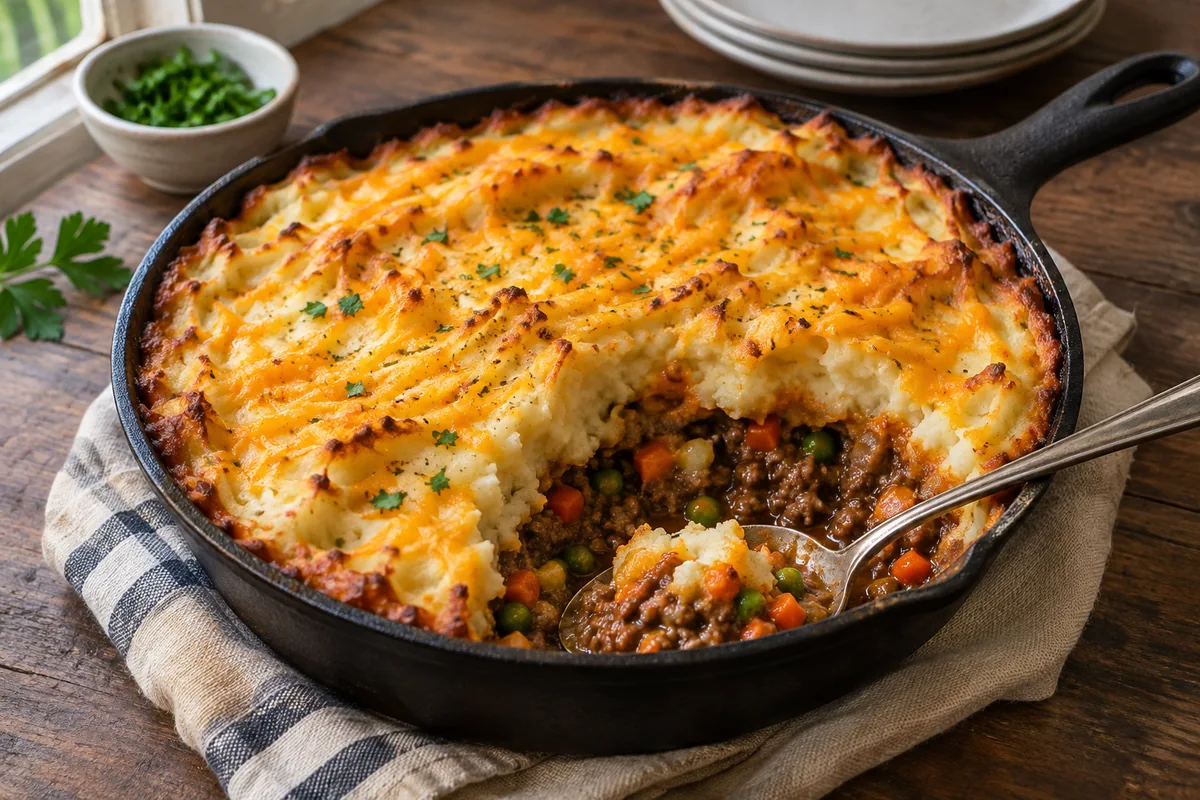
Cottage pie is a meal of two textures: a deeply savory beef filling and a soft potato topping with browned, slightly crisp ridges. Making it in a skillet keeps the meat juices in the same vessel where the gravy develops. Cheddar stirred into the mash adds a tangy edge, while a smaller scattering on top catches the oven heat and gives the finished pie a more defined crust.
The filling needs enough body to support those potatoes, but it should not become a stiff paste. Onion, carrots, and peas bring sweetness and small bites of texture around the beef. Tomato paste and Worcestershire sauce deepen the gravy without making it taste like tomato sauce. This is cottage pie because the filling uses beef; the closely related shepherd's pie traditionally uses lamb. Neither needs a pastry shell.
Recipe Summary
Equipment: 12-inch oven-safe skillet with at least 3-quart capacity, 4-quart saucepan, colander, potato masher, wooden spoon, and instant-read thermometer. Oven: 425 F, middle rack. Confirm that the skillet handle is oven-safe at this temperature.
Ingredients
- 2 pounds Yukon Gold potatoes, peeled and cut into 1-inch pieces
- 8 cups water, for boiling potatoes
- 1 1/2 teaspoons fine sea salt, divided
- 3 tablespoons unsalted butter
- 1/2 cup whole milk, warmed
- 4 ounces sharp cheddar, freshly grated and divided
- 1/2 teaspoon ground black pepper, divided
- 1 tablespoon olive oil
- 1 pound 90% lean ground beef
- 1 medium yellow onion, diced, about 1 cup
- 2 medium carrots, diced into 1/4-inch pieces, about 1 cup
- 2 garlic cloves, minced
- 2 tablespoons tomato paste
- 1 teaspoon dried thyme
- 2 tablespoons all-purpose flour
- 1 1/4 cups low-sodium beef broth
- 1 tablespoon Worcestershire sauce
- 3/4 cup frozen peas
Cook the Filling and Potato Topping
- Heat the oven to 425 F. Put the 2 pounds prepared potatoes in the saucepan with the 8 cups water and 1 teaspoon of the salt. Bring to a boil, reduce to a steady simmer, and cook for 15 to 18 minutes, until a knife slides easily through the pieces.
- Meanwhile, heat the 1 tablespoon olive oil in the 12-inch oven-safe skillet over medium-high heat. Add the 1 pound ground beef and cook for 6 to 8 minutes, breaking it into small crumbles, until browned and a thermometer registers 160 F in several gathered portions. Spoon off excess rendered fat, leaving about 1 tablespoon in the pan.
- Reduce to medium heat. Add the diced onion, totaling about 1 cup, and the 2 diced carrots, totaling about 1 cup. Cook for 6 to 8 minutes, stirring, until the onion softens and the carrots begin to yield. Stir in the 2 garlic cloves, 2 tablespoons tomato paste, and 1 teaspoon thyme; cook for 1 minute.
- Sprinkle in the 2 tablespoons flour and stir for 1 minute. Gradually add the 1 1/4 cups beef broth, scraping the skillet bottom, then stir in the 1 tablespoon Worcestershire sauce, remaining 1/2 teaspoon salt, and 1/4 teaspoon of the pepper. Simmer for 4 to 5 minutes until lightly thickened. Stir in the 3/4 cup frozen peas and remove from the heat.
- Drain the tender potatoes thoroughly and return them to the saucepan over low heat for 1 minute, shaking gently to release steam. Turn off the heat. Mash with the 3 tablespoons butter, then fold in the 1/2 cup warm milk, 3 ounces of the cheddar, and the remaining 1/4 teaspoon pepper until smooth but not overworked.
- Level the beef filling in the skillet. Place small spoonfuls of the warm mash across the surface, then join them gently with the back of a spoon. Draw shallow ridges with a fork and scatter the remaining 1 ounce cheddar evenly over the potatoes.
- Bake on the middle rack for 15 to 18 minutes, until the filling bubbles around the edges, the potato ridges are golden, and the center of the assembled pie reaches 165 F. If the cheese colors too quickly, cover loosely with foil while the center finishes heating.
- Set the hot skillet on a heatproof surface and let the pie stand for 5 minutes before dividing into 6 servings. Leave a dry oven mitt on the handle as a reminder that it remains hot.
Build a Filling That Holds Its Shape
Brown the beef before softening the vegetables
Putting everything into the skillet together releases vegetable moisture before the meat has a chance to color. Starting with the beef alone creates roasted flavor on both the crumbles and the pan. Break it apart, then let it sit briefly between stirs. The aim is small, irregular pieces, not a continuous layer of finely ground paste.
Use a skillet large enough for evaporation. A narrow saucepan can make the same quantity of beef release a pool of liquid, encouraging simmering instead of browning. If the beef is unusually wet, let that liquid cook away before adding the vegetables. Drain excess fat carefully, but keep the modest amount specified in the method so the flour can disperse into the filling.
Cut carrots small enough to finish in the gravy
Quarter-inch carrot pieces fit naturally on a spoon with the meat and soften during the skillet stage and final bake. Thick rounds are more likely to remain firm beneath an otherwise finished topping. Onion should be diced to a similar scale. Peas go in last because they need warming rather than extended frying; adding them early dulls their color and makes their skins more noticeable.
The tomato paste only needs a short turn against the hot pan. It should darken slightly and lose its raw aroma, not scorch onto the bottom. Stir the flour through that mixture before adding broth. Pouring in all the liquid before the flour disperses can leave pale lumps that are difficult to break apart among the vegetables.
Watch the trail left by your spoon
Before topping, drag a wooden spoon across the skillet. The gravy should flow slowly back into the path rather than flood it instantly. If it is soupy, simmer briefly uncovered. If it piles up like mashed beans, stir in warm water a tablespoon at a time. The oven will continue reducing moisture, so stop short of a dry filling.
A watery filling can push through the potatoes during baking, while a dry one makes the finished pie crumbly. Neither problem is solved by adding a thicker potato blanket. Adjust the gravy first, then spread the topping gently. The short rest after baking allows the gravy to settle without turning the pie into something that needs slicing like a firm casserole.
Make Cheddar Mash Without Gluey Potatoes
Yukon Gold potatoes give a naturally buttery texture and a topping that spreads readily. Russets can replace them pound for pound, producing a fluffier mash that may need a little extra warm milk if it feels stiff. Avoid waxy red potatoes for this particular finish; they resist breaking down and can invite too much mashing in pursuit of smoothness.
Drain thoroughly, then give the potatoes their minute over low heat to shed surface moisture. Mash by hand and add warm milk rather than cold milk. A blender or food processor ruptures too many starch cells and can turn the topping elastic. The goal is soft, spoonable mash with perhaps a few tiny potato pieces, not the absolute smoothness of a puree.
Freshly grated cheddar melts into the potatoes readily. Pre-shredded cheese can work in the same weight, although its coating may leave a slightly less cohesive texture. An aged Gouda is a reasonable equal-weight replacement with a sweeter, nuttier character. Keep the division between mixed-in cheese and surface cheese so the topping has flavor throughout instead of a thick, greasy cap.
Variations and Dinner Companions
For a gluten-free filling, replace the flour with the same amount of a gluten-free all-purpose blend suited to sauces and verify the broth and Worcestershire labels. Finely diced mushrooms can replace the carrots by volume if you want a more earthy filling; cook away their released liquid before adding flour. Do not replace the beef with raw lentils without changing the liquid and cooking method.
A sharp green salad or steamed cabbage provides contrast to the potatoes without making dinner more elaborate. When you want beef and potatoes in a quicker, unlayered format, garlic butter steak bites and crispy potatoes take those ingredients in another direction. For another savory baked dish with a pronounced cheddar note, Southern tomato pie with cheddar and basil offers a vegetable-centered alternative.
Make Ahead, Cool, and Reheat
For next-day baking, cool the cooked filling and mash separately in shallow containers and refrigerate promptly. Assemble cold in a lightly greased oven-safe baking dish rather than storing the entire pie in a skillet that may not suit prolonged refrigeration. Bake at 375 F, covered initially, until the center reaches 165 F, uncovering near the end for color. A cold assembled pie can take 35 to 50 minutes; the thermometer decides.
Ground beef must reach 160 F, and the assembled casserole and reheated portions should reach 165 F, per the FoodSafety.gov temperature chart. Refrigerate within 2 hours, or 1 hour above 90 F, following the chilling guidance. Keep leftovers at 40 F or below for 3 to 4 days; consult the cold storage chart.
Reheat individual portions covered in a 350 F oven until 165 F at the center. Covering protects the exposed mash from drying while the beef warms. Uncover briefly at the end if you want a drier top, but do not expect the potato ridges to stay as crisp as they were on the first bake.