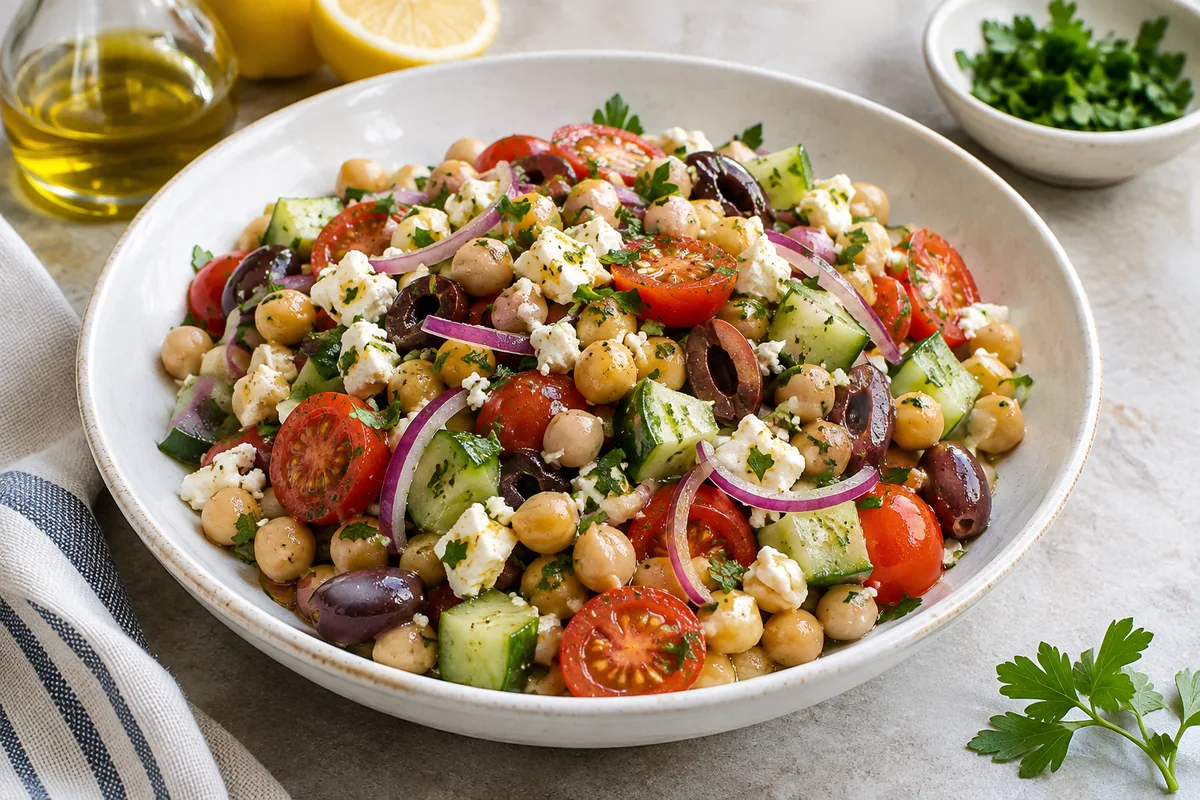
This salad puts chickpeas and cucumber on equal footing: the beans make it substantial enough for lunch, while the cucumber keeps every forkful crisp and refreshing. Tomatoes add juice, olives and feta supply salty accents, and a lemon oregano dressing connects the ingredients without turning them into a heavy marinated mixture.
The useful trick is to dress the chickpeas and red onion before adding the watery vegetables. That gives the beans time to pick up seasoning and takes some of the raw edge off the onion. Cucumber, tomatoes, and herbs enter later, keeping their textures more distinct when the bowl reaches the table.
Serving Size and Preparation Window
The total includes a 15-minute refrigerator rest after assembly. The chickpeas and onion also spend about 10 minutes in dressing while you chop the other ingredients; that period overlaps the preparation time. No stovetop or oven is needed because canned chickpeas are already cooked.
Use a large mixing bowl of at least 3-quart capacity, a colander, a clean towel, a whisk, and a sharp knife. A bowl with room to lift and turn the ingredients works better than a cramped serving dish. Transfer to a shallow platter afterward if you prefer a presentation that shows the vegetables and feta.
Ingredients
- 2 cans (15 ounces each) chickpeas, drained and rinsed, about 3 cups (480 g) drained
- 1 English cucumber, about 12 ounces (340 g), cut into 1/2-inch pieces
- 1 cup (150 g) cherry tomatoes, halved
- 1/3 cup (50 g) thinly sliced red onion
- 1/3 cup (50 g) pitted Kalamata olives, halved
- 1/2 cup (75 g) crumbled feta made with vegetarian or microbial rennet
- 1/2 cup (20 g) chopped fresh flat-leaf parsley
- 2 tablespoons (3 g) chopped fresh mint
- 3 tablespoons extra-virgin olive oil
- 2 tablespoons fresh lemon juice
- 1 tablespoon red wine vinegar
- 1 teaspoon Dijon mustard
- 1 small garlic clove, finely grated
- 1 teaspoon dried oregano
- 1/4 teaspoon fine salt
- 1/4 teaspoon freshly ground black pepper
Drain the Beans, Dry the Vegetables
Rinse canned chickpeas to remove the thick canning liquid, then drain them thoroughly. Water clinging to their surfaces dilutes the dressing before it reaches the beans. Rolling them gently across a clean towel removes excess moisture without the need to peel every chickpea, which is unnecessary for a chunky salad.
English cucumber has a thin skin and usually a modest seed cavity, so it needs little preparation beyond washing and dicing. If you substitute a garden cucumber, taste a small piece of the peel for bitterness and remove the tough skin if needed. Scoop out any loose, watery seeds before cutting.
Keep the cucumber pieces close in size to the chickpeas. Very large chunks leave bites that taste mostly of cucumber, while tiny dice lose their crunch quickly and collect at the bottom. Cherry tomatoes are convenient because the skins hold the halves together; cut exceptionally large ones into quarters so they fit comfortably on a fork.
Assemble the Salad
- Wash the cucumber, tomatoes, parsley, and mint under running water and dry thoroughly. Drain and rinse the canned chickpeas in a colander, shake well, and spread briefly on a clean towel to remove surface water.
- In a large mixing bowl, whisk the olive oil, lemon juice, red wine vinegar, Dijon mustard, grated garlic, oregano, salt, and black pepper until blended. Add the sliced red onion and chickpeas and toss thoroughly. Let them sit in the dressing while you finish the vegetables, about 10 minutes within the preparation time.
- Cut the cucumber into 1/2-inch pieces. If it has a noticeably watery seed channel, scrape that out before dicing. Halve the cherry tomatoes and pitted olives, and chop the parsley and mint if not already prepared.
- Add the cucumber, tomatoes, olives, parsley, and mint to the dressed chickpeas. Toss gently but thoroughly, lifting from the bottom so the dressing reaches the vegetables.
- Fold in the feta without crushing it. Cover and refrigerate for 15 minutes to let the flavors settle; this resting time is additional to the 20 minutes of preparation.
- Toss once more before serving, drawing any dressing from the bottom through the salad. Divide among four bowls as a main dish, keeping any portions not being served refrigerated.
A Dressing With Enough Acidity for Beans
Chickpeas have a mild, starchy interior, so they need more assertive seasoning than delicate lettuce. Lemon gives the dressing a fresh aroma, and red wine vinegar adds a deeper acidic note. Dijon helps the oil and acidic ingredients mix temporarily, making the first toss more even instead of leaving bare beans beside oily cucumber.
The tablespoon of vinegar is not an invitation to keep pouring in more acid. Let the salad rest before judging it, because the feta, olives, and vegetable juices change the balance. If it tastes muted straight from the refrigerator, toss it thoroughly first. Dressing may have collected underneath rather than disappearing.
Grating a small garlic clove spreads its flavor without leaving sharp chunks. A very large clove can overwhelm the mint and parsley, especially after overnight storage. Dried oregano needs a few minutes in the dressing to soften and release its aroma, which is another reason to whisk the dressing before cutting the remaining vegetables.
Salt, Herbs, and Feta Need Different Handling
The measured salt is intentionally modest because olives and feta already contribute plenty. Rinsing the chickpeas also makes their sodium level less dependent on the liquid in the can. If using reduced-sodium beans or a mild cheese, evaluate the finished bowl rather than increasing salt before the briny ingredients have been folded in.
Parsley is more than a garnish here. Its leaves add a fresh, slightly peppery flavor throughout the salad, while mint gives a cooler finish. Dry both herbs thoroughly before chopping so they separate into small pieces rather than forming wet clumps. Include tender parsley stems if finely minced, but discard any tough, thick stalks.
Fold in the feta last to preserve small creamy pieces. Tossing it vigorously with the initial dressing can smear it through the bowl, making the vegetables look chalky and the dressing heavier. For a strictly vegetarian salad, choose feta labeled with vegetarian or microbial rennet; not every traditional cheese uses a vegetarian coagulant.
Substitutions That Keep the Balance
Cooked chickpeas from dry work well when measured after draining and cooled before assembly. Use three cups, not the same weight of dry beans. Their cooking and cooling time is outside this recipe's stated schedule. White beans can substitute, but toss more gently because their skins and interiors tend to break more readily.
For a vegan bowl, omit the feta or use a firm vegan alternative that can be crumbled. The olives still supply briny flavor, while the chickpeas provide substance. Choose an unsweetened, savory product rather than a creamy spread, which would change the dressing. Check packaged condiments against your dietary needs rather than assuming every brand is identical.
Fresh dill can replace the mint in the same measured amount for a different herbal direction. Keep the parsley as the main herb so the salad stays balanced. If red wine vinegar is unavailable, white wine vinegar is a closer swap than sweet balsamic vinegar, which darkens the vegetables and changes the clean, sharp finish.
Lunch Bowls and Shared Plates
Four generous bowls make a complete light lunch without adding a grain base. For a shared table, portion it more modestly alongside other dishes. Serve with a slotted spoon only if extra liquid has accumulated; otherwise some dressing belongs with each serving so the chickpeas do not taste dry once transferred to individual plates.
As a vegetarian pairing, Southern tomato pie with cheddar and basil brings a warm, baked contrast to the salad's raw crunch. For a mixed menu that also includes seafood, honey butter garlic shrimp rice skillet can be served separately, leaving this bowl meat-free for guests who prefer it.
Make Ahead Without a Watery Bowl
For next-day preparation, refrigerate the dressed chickpeas and onion in one container and the chopped cucumber and tomatoes in another. Keep the washed, dried herbs and crumbled feta separate as well. Combine shortly before eating and allow the final 15-minute rest if time permits. This approach keeps vegetable water from diluting the dressing overnight.
For an already assembled salad, refrigerate promptly at 40 F or below and eat within three to four days, though the cucumber and herbs are best within two. Do not freeze the finished salad: cucumber becomes limp after thawing, and tomato juices separate. A fresh toss cannot restore the original crisp texture.
Return this perishable salad to refrigeration within two hours, or within one hour above 90 F. Follow FoodSafety.gov's clean and chill guidance for washing produce and keeping cold food cold. For a picnic, use an insulated cooler with ice packs and put out a small serving bowl at a time.