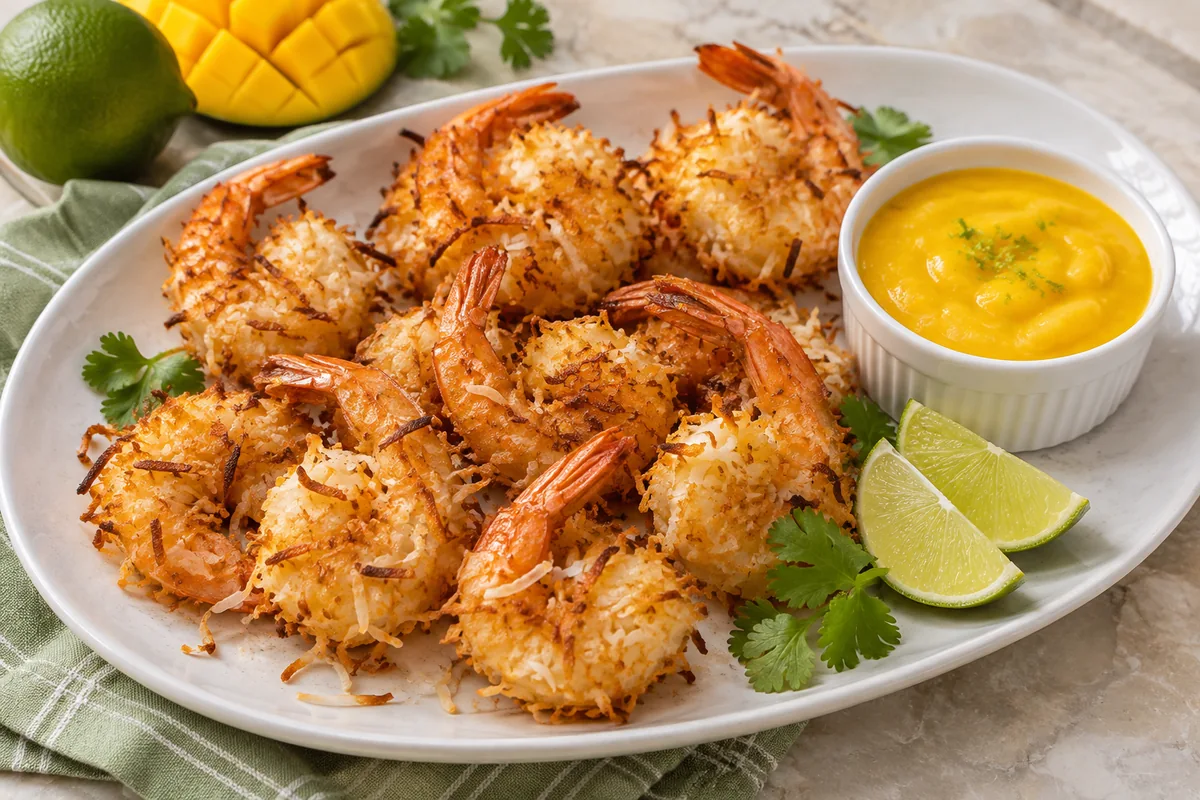
Coconut shrimp need a crisp, fragrant coating without a thick shell that hides the seafood. A combination of finely shredded coconut and panko creates that balance: coconut supplies the flavor, while the irregular breadcrumbs leave tiny spaces that brown in moving air. The dip brings ripe mango, tangy yogurt, and enough lime to cut through the richness.
Success depends more on dry shrimp and open basket space than on using a large quantity of oil. This recipe cooks one pound in two batches, with a light mist of oil on each side. Crowding everything into one layer that barely fits may look efficient, but overlapping shrimp trap steam and shed their damp coating when separated.
Batch Plan and Equipment
Use a 5- to 6-quart basket air fryer at 375 F. The four-minute preheat overlaps the final breading work, so it is included in preparation rather than added again to the total. Sixteen minutes assumes two eight-minute batches; smaller baskets or extra cooking to reach doneness will extend the schedule.
Have three shallow breading bowls, a small food processor, a tray reserved for raw seafood, clean tongs, a clean wire rack, and a thin-tip instant-read thermometer ready. A refillable oil mister lets you distribute the measured oil without drenching the crumbs. Follow the appliance manufacturer's instructions for preheating and acceptable oils.
Ingredients
- 1 pound (454 g) raw large shrimp, 21 to 25 count, thawed, peeled and deveined, tails left on
- 3/4 teaspoon fine salt, divided
- 1/2 teaspoon smoked paprika
- 1/3 cup (40 g) all-purpose flour
- 2 large eggs
- 1 tablespoon water
- 3/4 cup (60 g) unsweetened finely shredded coconut
- 1/2 cup (30 g) panko breadcrumbs
- 1 tablespoon avocado oil, divided, for brushing and a refillable oil mister
- 1 cup (165 g) diced ripe mango
- 1/4 cup (60 g) plain Greek yogurt
- 2 tablespoons fresh lime juice
- 1 teaspoon finely grated lime zest
- 1 teaspoon honey
- 1 teaspoon mild hot sauce
Dry Shrimp Give the Coating a Foundation
The count on the package describes how many shrimp make up a pound, not a universal size name. Twenty-one to twenty-five count shrimp are large enough to handle easily and cook before the coconut becomes too dark. Smaller shrimp cook faster and make the specified timing less useful; jumbo shrimp may need additional time.
Thaw frozen shrimp in the refrigerator, keeping them cold until preparation. Press them between paper towels until the surface no longer feels slippery with water. There is no benefit to rinsing raw seafood at the sink, which can spread contamination. The first flour layer needs a dry surface so it forms a thin adhesive film rather than clumps.
Prepare the Dip and Air Fry
- Before handling the raw shrimp, blend the mango, yogurt, lime juice, lime zest, honey, hot sauce, and 1/4 teaspoon of the salt in a small food processor until smooth. Transfer to a clean serving bowl, cover, and refrigerate.
- Pat the thawed shrimp thoroughly dry with paper towels; do not rinse them. Season with the remaining 1/2 teaspoon salt and the smoked paprika.
- Set out three shallow bowls. Put the flour in the first, beat the eggs with the water in the second, and combine the coconut and panko in the third. Coat each shrimp in flour, shake off excess, dip in egg, and press into the coconut mixture on both sides, leaving the tail uncoated. Place on a raw-seafood-only tray.
- During the final 4 minutes of breading, preheat a 5- to 6-quart basket air fryer to 375 F, following the appliance instructions. Keep the breaded shrimp refrigerated if they must wait. Brush the basket lightly with 1 teaspoon avocado oil and put the remaining 2 teaspoons oil in a refillable mister.
- Arrange half the shrimp in a single layer with space between them. Mist their tops with 1/2 teaspoon oil. Air fry at 375 F for 4 minutes, turn carefully with tongs, mist with another 1/2 teaspoon oil, and cook for about 4 minutes more. The coating should be golden, the shrimp flesh pearly and opaque, and the thickest part should reach 145 F on a thin-tip thermometer. Extend cooking as needed to reach doneness.
- Transfer the cooked shrimp to a clean wire rack. Repeat with the remaining shrimp, misting with the remaining 1 teaspoon oil, divided equally before and after turning. Allow about 8 minutes for the second batch, checking early because the fryer is fully hot.
- Discard leftover flour, egg wash, and coconut mixture that contacted raw shrimp. Wash hands and raw-seafood utensils and surfaces. Serve the cooked shrimp promptly with the refrigerated mango lime dip, using a clean platter and clean serving utensils.
Three Bowls, Three Different Jobs
Flour helps the egg cling to the shrimp; the egg then anchors the coconut and panko. Shake off surplus flour before dipping, and let excess egg drip back into its bowl. A thick wet layer encourages a heavy coating that can slide off in one piece when the shrimp are turned.
Use one hand for flour and crumbs and the other for egg if possible. That keeps your fingertips from collecting a thick batter of their own. Press the final mixture gently against each shrimp, then lift by the tail. Do not repeatedly bury and squeeze the shrimp, which creates a dense, uneven crust.
The tablespoon of oil is divided between the basket and both batches. Brushing the basket helps release; misting the exposed crumbs encourages golden color. If you only oil the basket, the top may remain pale. Avoid solid liners that block airflow unless your appliance specifically recommends them for this preparation.
Watch the Coconut and Check the Center
Coconut can go from golden to scorched quickly, particularly near a powerful heating element. Check when turning and again before the expected finish. If the coating has browned while the center is not done, reduce the setting to 350 F and continue checking rather than removing undercooked shrimp to protect the color.
Use a thin-tip thermometer inserted sideways into the thickest part, avoiding the tail and the basket. Aim for 145 F and pearly, opaque flesh; the FoodSafety.gov cooking chart lists the opaque-flesh cue for shrimp. A browned coating alone does not establish that the center is cooked.
Move the first batch to a clean rack instead of piling it in a bowl. Air can circulate underneath, and the second batch will not steam the first. Serve as soon as both are ready; prolonged warming continues to cook the shrimp and can make them rubbery even when the breading still looks appealing.
A Dip That Complements Rather Than Covers
Choose a mango that smells fragrant near the stem and gives slightly when pressed. Fibrous, underripe mango makes a less smooth dip and may taste sharply sour with the lime. Frozen mango works if thawed in the refrigerator and drained well before measuring, preventing meltwater from thinning the yogurt.
Greek yogurt supplies body and tang without making the dip overly rich. Blend until the lime zest is evenly distributed, then chill while the shrimp are breaded. If your mango is especially juicy, the dip may be spoonable rather than thick; chill it before judging the texture instead of adding more ingredients immediately.
A thick unsweetened dairy-free yogurt can replace the Greek yogurt in the same amount. For a gluten-free version, use a gluten-free all-purpose flour blend and gluten-free panko, checking the hot sauce and other labels too. Almond flour is not an equivalent first coating because it does not adhere or brown in the same way.
Serving Options and Advance Work
Serve the dip in its own bowl so the shrimp remain crisp until eaten. For a shrimp-centered dinner on another night, honey butter garlic shrimp rice skillet turns the same seafood into a rice-based main. When cooler weather calls for something spoonable, Cajun shrimp and corn chowder offers a different texture and seasoning direction.
The dip can be made one day ahead and refrigerated. For the shrimp, measure the dry coatings ahead, but keep them separate until breading. Bread shortly before cooking; a long rest lets moisture migrate outward and softens the crumbs. If there is a short delay, refrigerate the breaded shrimp in one layer rather than leaving them on the counter.
Keep raw shrimp and their tray away from the finished dip and cooked food. Do not reuse leftover breading or egg wash, even if it looks clean. Once raw seafood has touched those mixtures, they are not pantry ingredients anymore. Starting with the dip and finishing with raw preparation reduces unnecessary cleanup between tasks.
Store and Reheat Carefully
Refrigerate shrimp and dip separately within two hours, or one hour above 90 F, at 40 F or below. Use cooked shrimp within three to four days and the dip within three days. FoodSafety.gov's cold storage chart provides broader storage guidance; shorter ingredient-label limits still apply.
Reheat shrimp in a single layer in a 350 F air fryer, checking after three minutes and continuing until the center reaches 165 F. Timing varies with shrimp size and refrigerator temperature. Reheated shrimp will be firmer than freshly cooked ones, so heat only the portions needed and leave the cold dip out of the fryer.