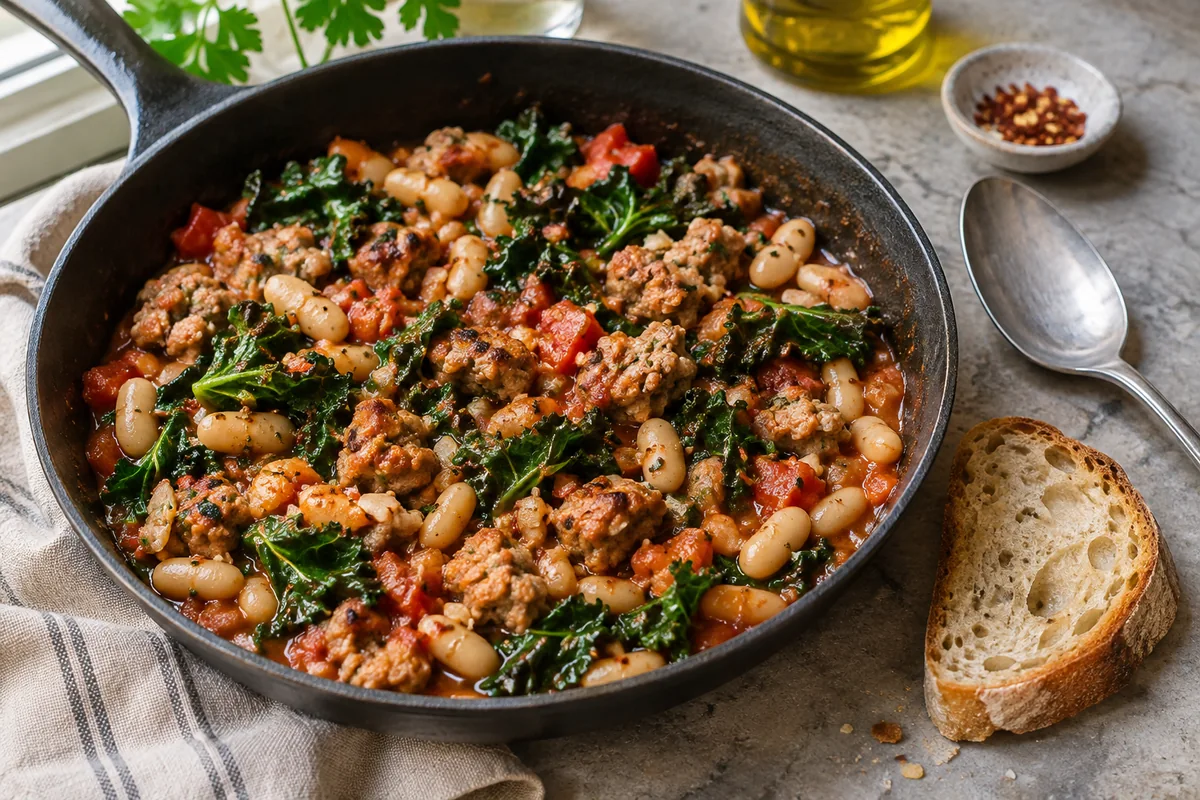
This skillet depends on three distinct textures: browned sausage with a little bite, white beans that stay tender and whole, and kale cooked past its tough stage without losing all its structure. The sauce is deliberately light, with softened cherry tomatoes forming a juicy base. Broth loosens the browned bits, and a spoonful of mashed beans gives those juices enough body to cling.
Italian sausage brings much of the seasoning, so the remaining ingredients have specific jobs rather than competing for attention. Rosemary and fennel reinforce its savory flavor. Lemon zest supplies fragrance, lemon juice cuts through the fat, and Parmesan rounds the broth into a glossy finish. Nothing needs a long simmer or a separate pot.
Dinner at a Glance
Use a deep 12-inch skillet with a lid, ideally with at least a 3-quart capacity. Stainless steel or enameled cast iron makes the browned bits easy to see. Have a slotted spoon, a clean plate for the cooked sausage, and an instant-read thermometer nearby. A shallow, undersized frying pan makes folding in the kale unnecessarily awkward.
Ingredients
- 1 tablespoon olive oil
- 1 pound raw mild Italian pork sausage, casings removed
- 1 medium yellow onion, diced
- 3 garlic cloves, minced
- 1 teaspoon finely chopped fresh rosemary
- 1/2 teaspoon fennel seeds, lightly crushed
- 1/4 teaspoon crushed red pepper flakes
- 1 cup cherry tomatoes, halved
- 2 cans (15 ounces each) cannellini beans, drained and rinsed
- 3/4 cup low-sodium chicken broth
- 8 ounces stemmed kale leaves, washed, dried, and cut into 1-inch pieces
- 1/4 teaspoon fine salt
- 1/4 teaspoon ground black pepper
- 1 teaspoon finely grated lemon zest
- 1 tablespoon fresh lemon juice
- 1/3 cup finely grated Parmesan cheese
Set Up the Three Main Ingredients
Choose Raw Sausage for a Better Pan Sauce
Raw Italian pork sausage releases flavorful fat while its surface browns. Remove the casings before it goes into the skillet, or buy bulk sausage. Mild sausage gives you more control over the finished heat because the recipe adds a measured amount of red pepper flakes. With hot sausage, omit those flakes if you prefer a gentler result.
Do not break the meat into tiny crumbs immediately. Larger clumps have enough uninterrupted contact with the skillet to develop a brown crust. Turn them after the first side colors, then divide them into bite-size pieces. A little fond on the bottom is useful; blackened patches and smoking fat mean the heat is too high.
Drain the Beans and Remove Tough Kale Stems
Cannellini beans are large enough to remain distinct beside the sausage, but small white beans or great northern beans can substitute in the same drained quantity. Rinse canned beans gently and let them drain while you prepare the vegetables. Their thick packing liquid is not needed because the sauce gets its body from a controlled amount of mashing.
Weigh the kale after removing its tough center stems. Eight ounces of trimmed leaves fills several loose cups, and the volume varies with the variety and how tightly it is packed. Tuscan kale has relatively flat leaves; curly kale works too but can take a couple of extra minutes to soften. Cut either into pieces small enough to eat comfortably with a spoon.
Numbered Skillet Method
- Heat the olive oil in a 12-inch deep skillet over medium-high heat. Add the sausage in large clumps, spreading them into a single layer. Leave undisturbed for 3 minutes, then turn and break into bite-size pieces. Cook for about 7 minutes more, stirring occasionally, until browned and the thickest pieces reach 160°F. Transfer to a clean plate with a slotted spoon.
- Reduce the heat to medium. Carefully spoon off excess rendered fat, leaving about 1 tablespoon in the skillet. Add the onion and cook for 5 minutes, stirring and scraping up browned bits. Add the garlic, rosemary, fennel seeds, and red pepper flakes; cook for 1 minute, stirring constantly.
- Add the cherry tomatoes and cook for 3 minutes, stirring gently, until softened and beginning to release their juices. Add the beans and chicken broth. Scrape the bottom of the skillet to release the remaining browned bits. Mash about 1/2 cup of the beans against the side with a spoon, then simmer uncovered for 8 minutes, stirring gently, until the broth looks lightly creamy.
- Add the kale in two batches, turning the first batch through the beans until it begins to wilt before adding the second. Return the cooked sausage and its collected juices to the skillet. Add the salt and black pepper. Cover and cook over medium-low heat for 5 minutes, stirring once, until the kale is tender and the sausage is hot throughout. If the kale is still chewy, cook 2 minutes longer; add water 1 tablespoon at a time only if the pan is dry.
- Remove the lid and turn off the heat. Stir in the lemon zest, lemon juice, and Parmesan for about 1 minute, until the cheese melts into the pan juices. Let the bubbles subside before spooning into four shallow bowls.
Read the Pan, Not Just the Clock
Browning and Safe Doneness Are Different Checks
The surface can turn brown before the center of a sausage clump is cooked. Check a few of the thickest pieces with a thermometer, entering from the side when that helps place the probe tip in the center. Raw pork sausage needs 160°F; raw chicken or turkey sausage needs 165°F, as listed in the FoodSafety.gov minimum temperature chart. Color alone is not a reliable safety check.
Use a clean plate for the cooked meat, not a dish that held raw sausage. Transferring it out of the skillet also protects its texture while the beans simmer. If you leave the sausage in from the start of the bean stage, it can become firm and lose some of its appealing browned contrast.
A Light Sauce Should Not Become Bean Paste
Press roughly half a cup of beans against the side of the pan, then stop mashing. That small portion releases enough starch to thicken the broth. Stir the remaining beans with a folding motion instead of repeatedly scraping through them. Aggressive stirring breaks the skins and turns a skillet with separate ingredients into something closer to a thick mash.
Before adding the kale, drag a spoon through the beans. The liquid should flow back into the trail slowly rather than sit in a stiff mound. Kale contributes a little moisture as it wilts, and Parmesan thickens the finish. If the pan already looks dry, add a tablespoon of water before covering rather than letting the beans catch.
If the finished skillet is soupy, uncover it and simmer briefly before adding the lemon and cheese. If it is too thick, loosen it a spoonful at a time with water. The right consistency leaves a little sauce in each bowl but does not require serving the meal with a ladle.
Ingredient Swaps That Preserve the Balance
Raw poultry sausage is a practical substitute, provided it reaches the higher temperature noted above. Because it can be leaner, watch the pan closely during browning and lower the heat if the fond darkens too fast. Fully cooked smoked sausage is a different ingredient: it offers less seasoning in the pan and a firmer texture, so expect a different result.
For a meatless variation, use a plant-based sausage according to its package cooking instructions, vegetable broth, and a vegetarian hard cheese or suitable alternative. This changes both the fat level and salt content. Taste before adding the measured salt if the replacement sausage is heavily seasoned; the original amount assumes ordinary mild pork sausage and low-sodium broth.
Spinach makes a softer, quicker-wilting replacement for kale, while Swiss chard offers a middle ground. With chard, cook finely chopped stems alongside the onion and add the leaves later. Keep the lemon finish either way: its brightness is especially useful when the greens have a mineral or slightly bitter edge.
Serving and Planning Another Meal
Serve the skillet in shallow bowls with bread to pick up the modest amount of sauce, or spoon it over cooked polenta. It needs neither a creamy dressing nor a heavy side. A crisp salad with a sharp vinaigrette provides a useful temperature and texture contrast, particularly if the sausage you chose is rich.
If the bean-and-greens combination appeals, creamy Tuscan white bean soup takes similar ingredients in a more broth-forward direction. For a richer sausage dinner centered on pasta instead of beans, creamy Cajun smoked sausage Alfredo offers a distinct alternative rather than an addition to this skillet.
Make Ahead and Store Without Drying Out
Wash, stem, and cut the kale a day ahead, then refrigerate it well dried in a covered container. Dice the onion and measure the seasonings separately. Leave the bean cans unopened until cooking, or refrigerate drained beans promptly. These small preparations shorten the assembly without forcing the browned sausage to sit through an unnecessary reheating cycle.
Refrigerate cooked portions in shallow containers within 2 hours, or 1 hour above 90°F, and keep at 40°F or below. Use within 3 to 4 days according to the FoodSafety.gov storage chart. Reheat to 165°F with a spoonful of water, covered, stirring to eliminate cold spots. Freeze portions for up to 2 months for quality, accepting that thawed kale will be softer.