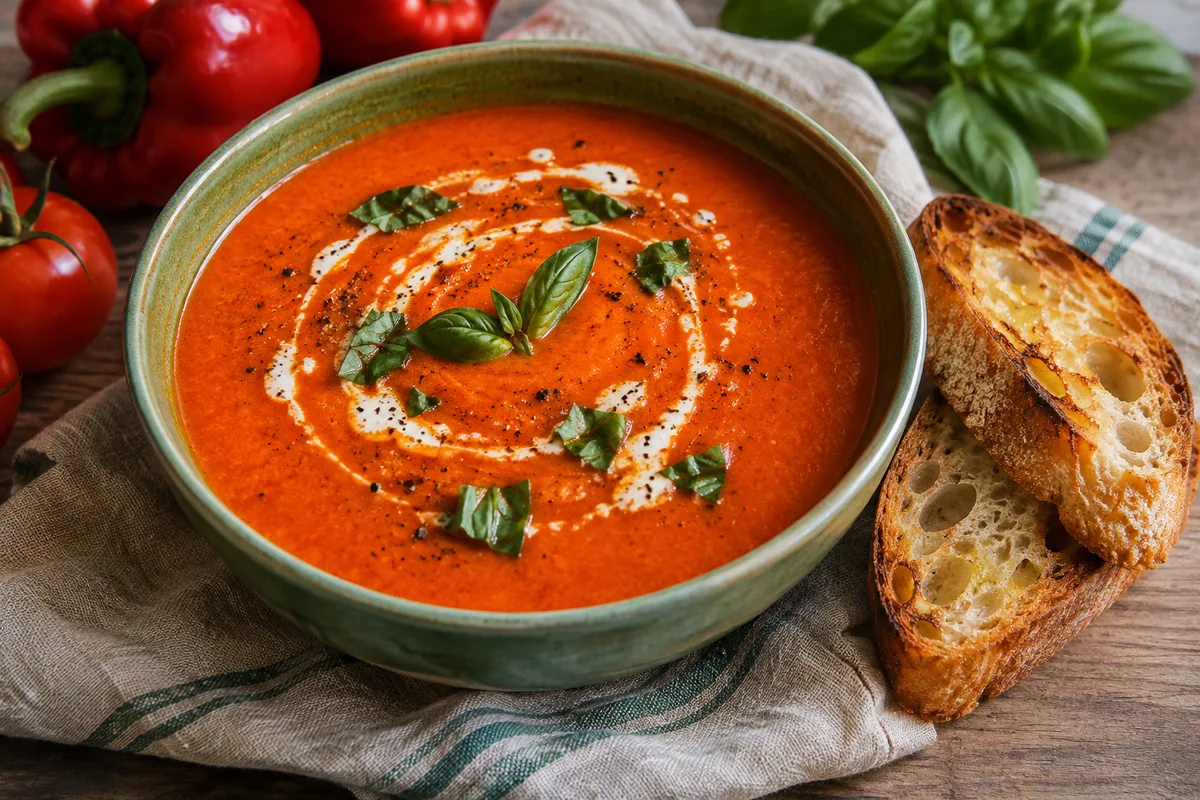
Roasting gives this soup a different character from tomatoes simply simmered in broth. The pepper skins blister while their flesh softens, and the tomatoes lose some water as their cut surfaces brown. Together they produce a rounded, savory sweetness that needs only onion, garlic, basil, and a little cream to become a complete bowl.
The finished soup is smooth enough for a mug but substantial enough to anchor lunch. Red wine vinegar sharpens the finish after blending, keeping the roasted vegetables from tasting flat. The cream is deliberately modest: it softens acidity and gives the soup a satiny texture without turning it into a dairy-heavy bisque.
Timing, Yield, and Equipment
Have two 18-by-13-inch rimmed sheet pans, a heatproof bowl and plate, and a 5-quart heavy pot ready. An immersion blender keeps the soup in one vessel; a heat-safe countertop blender gives a particularly fine finish. The onion cooks during the final stretch of roasting, and the peppers steam while the tomatoes begin their simmer.
Measured Ingredients
- 3 large red bell peppers (about 1 1/2 pounds), halved lengthwise, stems and seeds removed
- 2 pounds ripe plum tomatoes, cored and quartered
- 3 tablespoons olive oil, divided
- 1 teaspoon fine salt, divided
- 1/2 teaspoon ground black pepper, divided
- 1 medium yellow onion, diced
- 4 garlic cloves, minced
- 2 tablespoons tomato paste
- 3 cups low-sodium vegetable broth
- 1 teaspoon granulated sugar
- 1/2 cup heavy cream
- 2 teaspoons red wine vinegar
- 1/4 cup loosely packed fresh basil leaves, thinly sliced
Choose Vegetables for Sweetness and Body
Red Peppers Need Blistered Skins, Not Burned Flesh
Fully red bell peppers provide the sweetest, cleanest flavor for this soup. Green peppers are less ripe and bring a grassy bitterness that changes the result considerably. Yellow or orange peppers will work, although the soup's color becomes lighter. Choose firm peppers with substantial walls rather than thin, wrinkled fruit that may dry out quickly.
Place the peppers skin-side up and give them their own pan. Their exposed skins should pucker and develop dark patches, but the flesh underneath should remain moist. Covering the hot peppers traps a little steam and loosens those skins. Resist rinsing the peeled flesh under running water; that washes away flavorful juices you want in the pot.
Plum Tomatoes Keep the Soup Concentrated
Plum tomatoes have a useful balance of flesh and juice. Large slicing tomatoes can replace them by weight, but they often release more liquid. If the roasting pan is swimming in juice, do not discard it. Add it to the soup and simmer a little longer, uncovered, before blending to concentrate the flavor.
Very pale, out-of-season tomatoes may remain sharp even after roasting. The measured teaspoon of sugar rounds their edges without making the soup sugary. It cannot create ripe tomato flavor, so choose the best tomatoes available. Keep the vinegar until the end; the right amount of finishing acid is easier to judge once the soup is smooth.
Roast, Simmer, and Blend
- Heat the oven to 425°F with racks in the upper and lower thirds. Line two 18-by-13-inch rimmed sheet pans with parchment rated for this temperature. Put the peppers skin-side up on one pan and the tomatoes cut-side up on the other. Rub the vegetables with 2 tablespoons of the oil, dividing it between the pans, and season with 1/2 teaspoon salt and 1/4 teaspoon pepper. Roast for 35 minutes, exchanging the pans' positions after 20 minutes, until the peppers are blistered and the tomatoes have softened and browned at the edges.
- During the last 10 minutes of roasting, heat the remaining 1 tablespoon oil in a 5-quart heavy pot over medium heat. Add the onion and cook for 8 minutes, stirring occasionally. Add the garlic and cook for 30 seconds, then stir in the tomato paste for 1 minute. Reduce the heat briefly if the roasted vegetables are not ready.
- Transfer the roasted peppers to a heatproof bowl and cover with a plate for 10 minutes. Meanwhile, add the tomatoes and all their pan juices to the onion mixture. Stir in the broth, sugar, remaining 1/2 teaspoon salt, and remaining 1/4 teaspoon pepper. Bring to a gentle simmer and start a 20-minute timer.
- When the peppers are cool enough to handle, peel away the loosened skins, discarding the skins. Roughly chop the flesh and add it to the simmering soup, along with any juices in the bowl. Continue simmering, partially covered, until the 20-minute timer ends and the vegetables are very tender.
- Take the pot off the heat. Blend with a fully submerged immersion blender until smooth, keeping its head below the surface to prevent splashing. Alternatively, cool slightly and blend in small batches in a vented countertop blender rated for hot liquids, never filling it more than halfway; return the soup to the pot.
- Stir in the cream and vinegar. Warm over low heat for 2 to 3 minutes until steaming, without a hard boil. Stir in half the basil. Divide among six bowls and finish with the remaining basil.
A Smoother Soup Without Scorched Aromatics
Give the Onion Its Own Gentle Start
The onion should soften and turn translucent before the garlic enters the pot. This is not the place for darkly caramelized onion, which can overwhelm the pepper flavor. Stir the tomato paste across the oily bottom for its short cooking time; it should deepen slightly in color rather than stick in dry, black spots.
If the vegetables need extra roasting time, turn down the pot instead of allowing the garlic to keep frying. Once the tomatoes and broth are added, scrape up the browned paste with a wooden spoon. Those dissolved savory bits give the soup more depth than simply stirring raw paste into the finished puree.
Blend Safely and Judge the Thickness Warm
Hot liquid expands and releases steam when agitated. With a countertop blender, follow the manufacturer's hot-liquid instructions, vent the lid as directed, and work in small batches. Never seal steaming soup in a personal blender cup. An immersion blender is simpler, but it still needs its blade guard fully submerged before the motor starts.
Blend longer than the first moment the soup looks uniform. Tiny fragments of pepper skin or tomato peel can take another minute to disappear. If the texture remains fibrous, strain it before adding cream, pressing gently with a ladle. Straining removes some vegetable solids, so expect a slightly smaller yield and a more delicate body.
The soup should pour easily while leaving a soft coating on a spoon. If it is too thick, add water a few tablespoons at a time after blending. If it is thin, simmer uncovered before adding cream, stirring frequently to prevent the puree from catching on the bottom. Cream belongs at the end so prolonged boiling does not roughen its texture.
Variations and a Complete Lunch
For a dairy-free bowl, omit the cream or use unsweetened oat cooking cream. Full-fat coconut milk also creates body, but its flavor is noticeable and makes a different soup. Do not replace heavy cream with an equal amount of plain yogurt over high heat; yogurt is more likely to separate when it meets hot, acidic tomatoes.
Jarred roasted peppers are a useful shortcut when fresh peppers are expensive. Use drained pepper flesh rather than the jar's total packed weight, and choose peppers without added sweeteners or strong seasoning. Because brine can bring salt and acidity, taste the soup before adding the full vinegar measure when making that substitution.
A crisp grilled cheese sandwich makes a natural partner for the smooth soup. For a cheese-forward soup on another day, smoked Gouda broccoli cheddar soup leans into a richer, spoon-coating texture. If you prefer beans and leafy greens to a blended bowl, creamy Tuscan white bean soup takes the meal in a heartier direction.
Make Ahead and Keep the Basil Fresh
The roasted vegetables can be prepared a day ahead. Refrigerate the peeled peppers with their juices and the tomatoes with theirs in covered containers. When cooking from cold, allow enough simmering time for all the vegetables to become fully hot and tender before blending. Add fresh basil only after the soup is reheated so it stays fragrant.
For freezing, stop before adding cream, vinegar, and basil. Freeze the cooled soup base in meal-size containers, leaving headspace for expansion, for up to 3 months for best quality. Thaw in the refrigerator, reheat thoroughly, then add the reserved finishing ingredients. Freezing the base separately reduces the chance of a grainy dairy texture.
Divide leftovers into shallow containers and refrigerate within 2 hours, or 1 hour when temperatures exceed 90°F. Store at 40°F or below for 3 to 4 days, following the FoodSafety.gov cold storage chart. Reheat only the portion needed to 165°F, stirring to distribute heat, as directed by the safe minimum temperature chart.