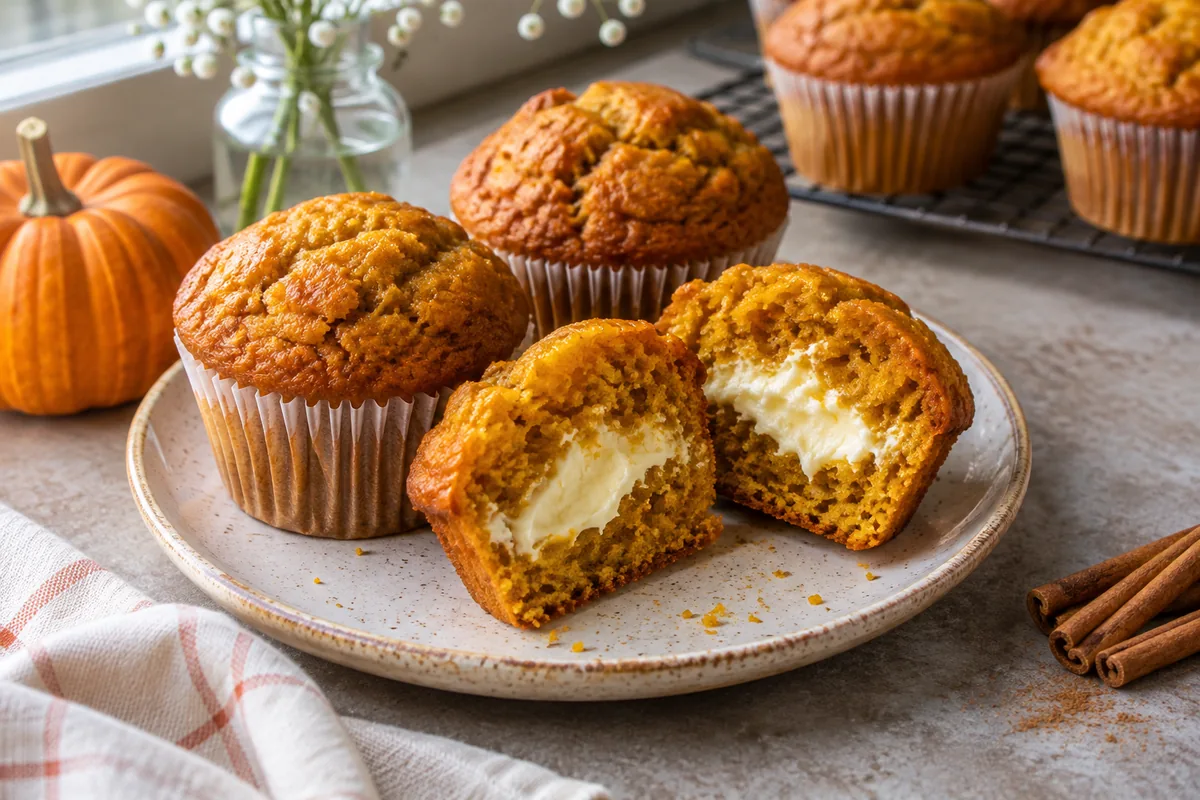
A good filled pumpkin muffin needs more than a generous spoonful of cream cheese. The batter must be thick enough to support the center, the filling must stay away from the liner, and the pumpkin crumb must bake through before the outside dries out. This version uses a small, measured filling portion and two layers of batter to keep those elements in balance.
The result is a softly spiced muffin with a creamy pocket rather than a heavy cheesecake cupcake. Cinnamon leads, ginger adds warmth, and smaller amounts of nutmeg and cloves keep the pumpkin flavor recognizable. Oil keeps the crumb supple after refrigeration, which matters because the cream cheese filling makes these muffins a refrigerated baked good.
Timing, Yield, and Pan Size
The total includes 20 minutes of cooling after baking. Start with softened cream cheese; if yours is refrigerator-cold, allow additional preparation time to soften it safely. Use a standard 12-cup metal muffin pan, not a jumbo pan. Have paper liners, three mixing bowls, a spatula, a small whisk, a tablespoon measure, and a cooling rack ready.
Measured Ingredients
- 6 ounces full-fat block cream cheese (170 grams), softened
- 3 tablespoons granulated sugar, for the filling
- 1 1/2 teaspoons vanilla extract, divided
- 1 1/2 cups all-purpose flour (180 grams)
- 1 teaspoon baking powder
- 1/2 teaspoon baking soda
- 1 1/2 teaspoons ground cinnamon
- 1/2 teaspoon ground ginger
- 1/4 teaspoon ground nutmeg
- 1/8 teaspoon ground cloves
- 1/2 teaspoon fine salt
- 3/4 cup plain canned pumpkin puree (180 grams), not pumpkin pie filling
- 1/2 cup granulated sugar, for the batter
- 1/4 cup packed light brown sugar (50 grams)
- 2 large eggs
- 1/3 cup neutral vegetable oil
- 1/4 cup whole milk
Build a Filling That Stays in Place
Use Block Cream Cheese and Modest Portions
Full-fat block cream cheese is thicker and more predictable than spreadable cream cheese from a tub. Tub products can contain extra water or stabilizers that alter how the center behaves in the oven. Soften the block only enough to mix smoothly. It should yield to a spoon, not look melted, oily, or runny.
The filling contains no egg, which keeps the mixing simple and leaves a creamy center after baking. Beat the sugar and vanilla into the cheese before portioning so every muffin gets the same sweetness. Chilling the portions briefly while you make the batter makes them easier to set down in the middle without smearing them across the paper.
Keep the filling quantity as written rather than using an entire 8-ounce package. Extra filling displaces batter and can push through the top or leave a wet-looking ring around the center.
Thick Pumpkin Puree Supports the Center
Plain canned pumpkin puree offers consistent moisture. Measure three-quarters of a cup, not three-quarters of a can; those are very different quantities. Homemade puree is suitable only when thick enough to mound softly on a spoon. If liquid collects around it, drain it before measuring rather than trying to compensate with extra flour later.
Whisk the pumpkin with the sugars and eggs until the brown sugar lumps dissolve. The oil should be evenly dispersed before the dry ingredients enter. Once flour is added, switch to folding. Continued whisking at that stage makes the crumb more elastic and can create long tunnels instead of the close, tender texture these muffins need.
Numbered Baking Method
- Heat the oven to 375°F with a rack in the middle. Line a standard 12-cup metal muffin pan with paper liners. Place the pan on a level work surface.
- Beat the softened cream cheese, 3 tablespoons granulated sugar, and 1/2 teaspoon of the vanilla in a small bowl until smooth. Divide into 12 equal portions, about 1 tablespoon each, keeping the portions separate on a plate. Refrigerate them while mixing the batter so they hold their shape.
- Whisk the flour, baking powder, baking soda, cinnamon, ginger, nutmeg, cloves, and salt in a large bowl. In a second bowl, whisk the pumpkin puree, 1/2 cup granulated sugar, brown sugar, eggs, oil, milk, and remaining 1 teaspoon vanilla until smooth.
- Pour the pumpkin mixture into the flour mixture. Fold with a flexible spatula just until no dry flour remains, scraping the bottom of the bowl. Do not beat the batter smooth or leave it standing for an extended rest.
- Divide half the batter among the 12 liners, about 2 tablespoons per cup. Set one cream cheese portion in the center of each, keeping it away from the paper. Spoon the remaining batter over the centers, about 2 tablespoons per muffin, covering the filling as completely as possible. The cups should be roughly two-thirds to three-quarters full.
- Bake for 22 to 26 minutes, checking at 22 minutes, until the tops spring back lightly and a toothpick inserted into the pumpkin crumb beside the filling comes out without wet batter. A thin probe in that crumb should read about 200°F. Do not judge doneness by the soft cream cheese center alone.
- Cool in the pan for 5 minutes, then carefully transfer the muffins to a wire rack for 15 minutes more. Serve warm, or refrigerate promptly in a covered container once the initial steam has dissipated. The 65-minute total includes this 20-minute cooling period.
Layering and Doneness
Keep a Batter Barrier Beneath and Around the Filling
The first layer of batter cushions the cream cheese so it does not settle directly against the bottom liner. Place the filling in the center without pushing it down. Divide the remaining batter among all twelve cups before smoothing any individual top; this prevents a few generous early muffins from leaving the last ones uncovered.
A small patch of filling that peeks through is not a failure, but try to cover most of it. The upper batter layer helps contain the creamy center as the muffin rises. If one portion lands against the liner, nudge it inward with a clean spoon before adding the top batter. That small adjustment makes the baked muffin easier to unwrap.
Check Pumpkin Crumb, Not the Creamy Pocket
A toothpick pushed straight through the center can emerge coated in cream cheese even when the surrounding muffin is fully baked. Aim slightly off-center and check the orange crumb. Moist crumbs are fine; shiny orange batter is not. The tops should spring back when touched lightly rather than keep a deep indentation.
Oven temperatures and pan finishes vary, so begin checking at the early end of the range. A dark pan can color the outside more quickly than a light metal one. If the tops are already deeply browned while the crumb is underdone, cover loosely with foil and continue baking, checking every couple of minutes.
The short rest in the pan allows the fragile muffins to firm before moving. Leaving them there until completely cold traps steam around their bases. Transfer them carefully by the tops of the liners and let the rack circulate air underneath. Do not seal steaming-hot muffins in a container; condensation makes their tops sticky and their liners damp.
Common Problems and Useful Substitutions
A gummy band around the filling usually points to excess moisture, underbaking, or an oversized center. Check the puree first, then the filling portions and oven temperature. Adding more flour indiscriminately can make the outer crumb dry without fixing the wet center. An inexpensive oven thermometer can reveal whether the actual oven temperature matches the setting.
Flat, tough muffins often come from overmixing or old leavening. Whisk the baking powder and soda thoroughly into the flour so they distribute evenly. Do not hold the finished batter for hours: the leavening begins reacting after wet and dry meet. If working ahead, prepare the filling and measure the dry ingredients instead of refrigerating mixed batter overnight.
Use a neutral oil such as canola or sunflower. Melted butter in the same volume makes the refrigerated crumb firmer. For a spice shortcut, replace the four individual spices with 2 3/8 teaspoons of a pumpkin spice blend whose flavor you enjoy.
For another cream-cheese breakfast bake with a brighter fruit profile, lemon blueberry cream cheese coffee cake offers a sliceable alternative. A loaf of brown butter pecan banana bread provides a nutty contrast when putting together a brunch basket; keep portions small if serving both.
Make Ahead, Refrigerate, or Freeze
Prepare the cream cheese filling one day ahead, cover, and refrigerate. Bring it just to a scoopable consistency before portioning, without leaving it out for an extended period. Measure the dry ingredients into a separate covered bowl. In the morning, whisk the pumpkin mixture, fold the batter, and assemble immediately.
Refrigerate the filled muffins within 2 hours of baking, or within 1 hour if the room is above 90°F; the initial cooling period counts toward that limit. Keep at 40°F or below and use within 3 to 4 days. The FoodSafety.gov chilling guidance explains these time and temperature limits. These are not muffins to leave on the counter overnight.
Freeze cooled muffins individually wrapped for up to 2 months for best quality, then thaw in the refrigerator. They can be served chilled or reheated. If reheating leftovers, heat the center to 165°F, following the FoodSafety.gov temperature chart; use short microwave intervals and check carefully, since the cream cheese pocket can become much hotter than the surrounding crumb.