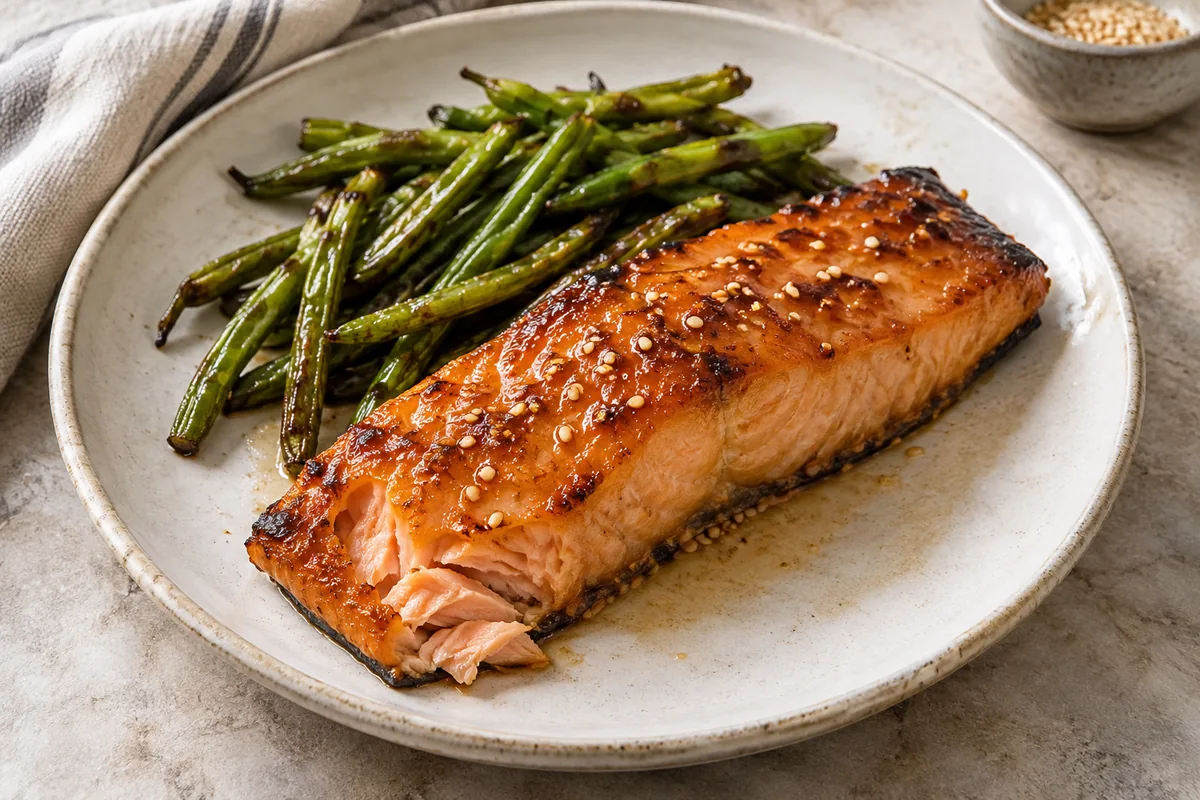
Miso and maple bring different kinds of depth to a salmon fillet. The miso supplies fermented savoriness and a salty backbone; maple syrup rounds its edges and helps the surface turn glossy in the oven. Rice vinegar keeps the coating from tasting like candy, while ginger adds a clean, warm bite. The goal is a thin glaze that clings to the fish, not a thick puddle that boils around it.
Green beans make this a practical sheet-pan dinner, but they need a head start. Salmon can finish before raw beans develop much color, especially when the fish is cut into individual portions. Roasting the beans first gives them a chance to wrinkle and blister. The salmon then joins them for the final stretch, so both components arrive at the table hot without asking the fish to wait in the oven.
Recipe Summary
Equipment: One heavy 18-by-13-inch rimmed sheet pan, aluminum foil, mixing bowl, pastry brush or spoon, thin spatula, and instant-read thermometer. Oven: 425 F on the middle rack.
Ingredients
- 4 skin-on salmon fillets, 6 ounces each and about 1 inch thick
- 1 pound fresh green beans, stem ends trimmed
- 2 tablespoons olive oil, divided
- 1/4 teaspoon fine sea salt
- 1/4 teaspoon freshly ground black pepper
- 2 tablespoons white miso paste
- 2 tablespoons pure maple syrup
- 1 tablespoon reduced-sodium soy sauce
- 1 tablespoon unseasoned rice vinegar
- 1 tablespoon water
- 2 teaspoons finely grated fresh ginger
- 1 teaspoon finely grated garlic
- 1 teaspoon toasted sesame seeds
- 2 scallions, thinly sliced
Sheet-Pan Method
- Heat the oven to 425 F with a rack in the middle. Line the 18-by-13-inch rimmed sheet pan with foil. Dry the 1 pound trimmed green beans thoroughly and toss them on the pan with 1 tablespoon of the olive oil, the 1/4 teaspoon salt, and the 1/4 teaspoon pepper. Spread in one layer and roast for 10 minutes.
- Meanwhile, whisk the 2 tablespoons white miso, 2 tablespoons maple syrup, 1 tablespoon soy sauce, 1 tablespoon rice vinegar, 1 tablespoon water, 2 teaspoons ginger, and 1 teaspoon garlic in a bowl until smooth. Reserve 2 tablespoons of this glaze in a separate clean bowl for finishing.
- Pat the 4 salmon fillets, 6 ounces each, dry with paper towels. Rub their skin sides with the remaining 1 tablespoon olive oil. Remove the pan from the oven, turn the beans, and move them toward the edges, leaving 4 open spaces without stacking the beans deeply.
- Place the salmon skin-side down in the open spaces, leaving a little room between fillets. Brush all the unreserved glaze over their tops and sides. Keep the reserved glaze separate from the brush, bowl, and utensils that touch raw fish.
- Roast for 10 to 15 minutes, checking the thickest part of each fillet for 145 F. The beans should be tender with scattered browned spots. If one component finishes first, transfer it to a clean platter and return the other to the oven until ready.
- Spoon the 2 tablespoons clean reserved glaze over the cooked salmon, dividing it evenly. Scatter the 1 teaspoon toasted sesame seeds and 2 sliced scallions over the fish and beans. Divide into 4 servings, using a thin spatula to lift each fillet from the pan.
A Glaze That Stays Balanced
Choose mellow miso and real maple syrup
White miso is a good fit because its flavor is generally milder than darker, longer-fermented varieties. Brands still differ in saltiness and consistency, so whisk thoroughly rather than assuming a quick stir will dissolve every lump. The measured water helps loosen a firm paste without relying on extra soy sauce. This matters because salmon benefits from a flavorful coating, not a heavy dose of salt.
Pure maple syrup has a woody flavor that stands beside the miso instead of merely supplying sweetness. Pancake syrup is not a direct flavor replacement. Honey can replace the maple tablespoon for tablespoon, but its thicker texture and floral flavor will change the glaze. Whisk it with the water first if it resists blending, and watch the surface closely because a sweet coating can darken before the center is done.
Keep the coating thin and the reserved portion clean
The glaze is meant to cover the exposed flesh in a shiny layer. If it runs down onto the foil, leave it there rather than repeatedly scooping it over the fish. Those small drips may darken more than the salmon itself. A very deep pool beneath the fillet steams the underside and can develop a burnt edge that tastes harsh when scraped onto the plate.
Setting aside the finishing portion before touching the fish preserves its fresh ginger aroma and prevents raw seafood contamination. Use a different spoon for that clean portion. Do not dip the pastry brush back into it after coating raw salmon. The unreserved mixture goes into the oven with the fish; any traces left in its original bowl should be discarded rather than used as a table sauce.
Use vinegar as a counterweight
Unseasoned rice vinegar supplies acidity without the extra sugar and salt found in seasoned rice vinegar. The tablespoon in this recipe is enough to brighten the maple without making the glaze taste pickled. If rice vinegar is unavailable, substitute the same amount of apple cider vinegar for a slightly fruitier result. Avoid adding a second sweet condiment, which can obscure the fermented flavor that makes the dish interesting.
Coordinating Beans and Fish
Dry beans roast more effectively than wet ones. Water left from rinsing produces steam, especially in a crowded tray, and delays browning. Spread them on a towel before tossing with oil. Standard green beans suit the full head start; very slender haricots verts may need only 5 minutes before the salmon joins them. Thick, mature beans may need longer and should be checked by biting one, not by color alone.
Four similar fillets simplify timing. If the tail piece is much thinner than the others, begin checking it several minutes earlier and remove it individually at the safe temperature. Frozen salmon works when thawed in the refrigerator and dried carefully. Ice crystals or a partly frozen center make the exterior cook too far ahead, so allow complete thawing rather than treating the glaze as a solution to uneven cooking.
The skin helps support the flesh during transfer, but this roasting method does not promise crisp skin. It sits against foil while the upper surface receives most of the heat. If you prefer not to eat it, slide the spatula between the cooked flesh and skin before serving. Skinless fillets can be used at the same weight; oil their undersides and lift carefully because they have less structural support.
Fixing Common Texture Problems
If the glaze looks pale when the salmon reaches 145 F, remove the fish anyway. A dark lacquer is not worth a dry center. The clean finishing glaze will restore shine. Conversely, if the coating darkens early, shield the tops loosely with foil and keep cooking until the thermometer confirms doneness. Moving the pan farther from the upper heating element can also help in an oven with strong top heat.
White beads on the surface are coagulated fish proteins, not evidence that the meal is ruined. They become more noticeable with intense heat or overcooking. Check early and avoid leaving finished fillets in the hot pan while arranging the table. For limp beans, separate them more widely and roast them briefly after removing the salmon; do not keep cooking the fish to fix its vegetables.
Serving and Advance Preparation
Plain rice makes a useful base because it absorbs glaze without adding another competing sauce. The fish and beans are also substantial enough to serve without a grain. For a spicier sweet-savory direction on another evening, brown sugar chili salmon bowls offer a different treatment of salmon. For a milder fish dinner with its starch built in, consider sheet-pan lemon herb cod and potatoes.
Trim and dry the beans a day ahead, keeping them refrigerated in a towel-lined container. Mix the glaze separately and refrigerate it covered; stir before dividing and using. Do not leave the fish marinating overnight in the salty glaze, which can change its surface texture. Coating just before roasting keeps preparation simple and the flavor concentrated where it belongs.
Safe Storage and Gentle Reheating
Cook salmon to 145 F and reheat leftovers to 165 F, following the FoodSafety.gov temperature chart. Move leftovers into shallow containers and refrigerate within 2 hours, or 1 hour above 90 F, under the safe chilling guidance. Keep at 40 F or below and use within 3 to 4 days; the cold storage chart provides storage context.
For best texture, eat the salmon sooner within that window. Reheat covered at 300 F with a small splash of water until it reaches 165 F, checking early because portions vary. Store beans beside, rather than under, the fish so their moisture does not soften its surface further.