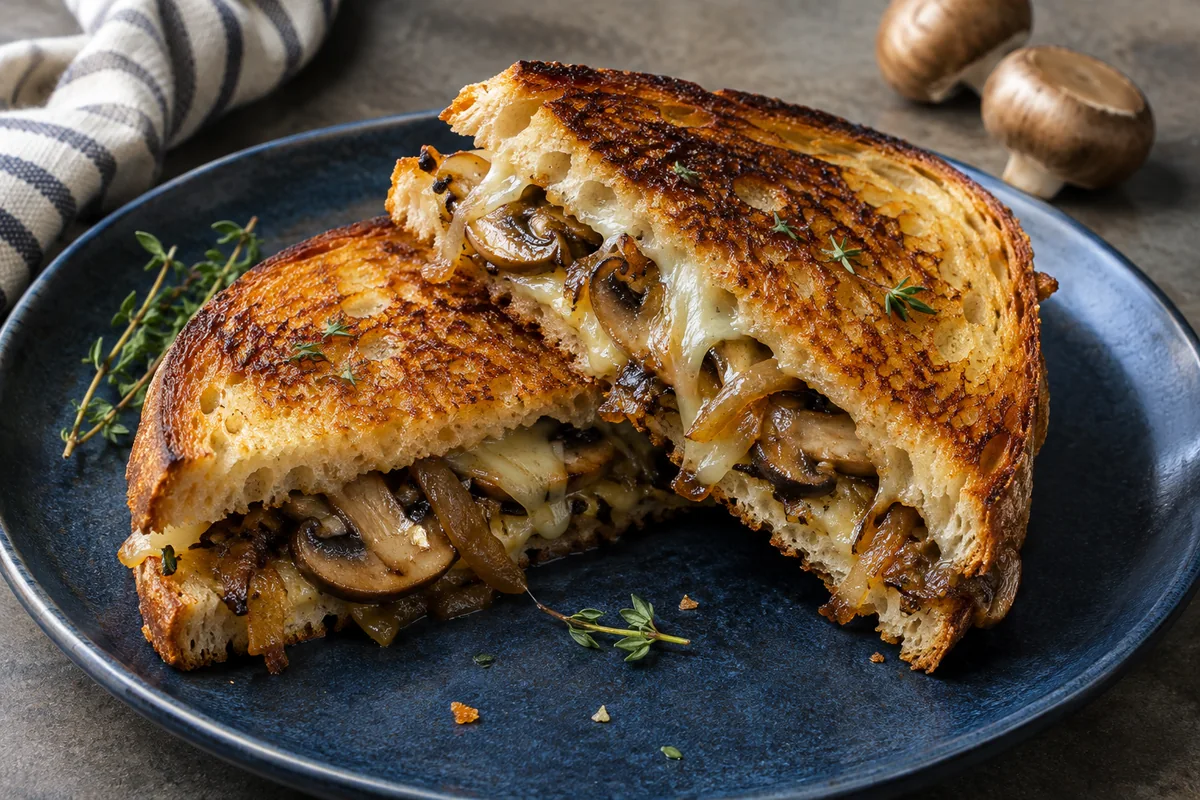
This grilled cheese depends on two very different kinds of browning. Onions need patient, relatively gentle heat to become soft and sweet throughout. Mushrooms need enough open pan space and heat to shed their water and develop a savory surface. Cooked separately, they make a concentrated filling that complements melted cheese without soaking the bread.
Gruyere supplies a nutty, fluid melt, while sharp cheddar keeps the sandwich from tasting only rich and sweet. Sourdough adds a little acidity and enough structure to carry the vegetables. A thin layer of Dijon is not meant to announce itself as mustard; it sharpens the filling and makes the next bite as appealing as the first. The finished sandwich should bend slightly when lifted, with a crust that stays crisp rather than oily.
The lunch schedule
Cooking time allows about 35 minutes for onions, 10 for mushrooms, and 15 for grilling two batches. These are working estimates; deeply colored onions can take longer. Use a 12-inch heavy skillet, a wide spatula, a plate for the filling, and a wire rack. No oven is required. Medium-low heat is the starting point for onions and sandwiches; mushrooms cook over medium-high heat.
Ingredients
- 4 tablespoons unsalted butter, softened, divided
- 1 tablespoon olive oil
- 2 large yellow onions, thinly sliced (500 g prepared)
- 1/2 teaspoon fine salt, divided
- 1/4 cup water (60 ml), divided
- 12 ounces cremini mushrooms, trimmed and sliced 1/4 inch thick (340 g)
- 1 teaspoon chopped fresh thyme leaves
- 1/4 teaspoon ground black pepper
- 2 teaspoons balsamic vinegar
- 8 slices sourdough bread, about 1/2 inch thick
- 2 teaspoons Dijon mustard
- 6 ounces Gruyere, shredded (170 g)
- 4 ounces sharp cheddar, shredded (115 g)
Let the onions soften before chasing color
Thin, even slices soften at roughly the same rate, preventing a mixture of burnt wisps and raw centers. Slice from stem to root for strands that remain distinct. The first stage is mostly about evaporation: onions become translucent, shrink, and give off steam. Once the pan becomes drier, pale gold patches turn into a deeper amber color.
The small additions of water loosen browned sugars from the skillet and spread that flavor back through the onions. Add water when the bottom is becoming sticky and brown, not while liquid is already pooling. Black patches and a harsh smell mean the heat is too high. Caramelization is not a race; if your onions need another ten minutes, allow it rather than compensating with a hotter burner.
Brown the mushrooms in an uncrowded layer
Cremini mushrooms bring a savory, woodsy flavor, but their water content is the real technical issue. Wipe away dirt or rinse briefly and dry thoroughly before slicing. Add them only after removing the onions so they have direct contact with the hot pan. At first they may appear to absorb all the butter, then release liquid as their cells soften.
Keep cooking until that liquid evaporates. Only then will the mushroom edges brown rather than simmer. A little residual oil sheen is fine; a puddle is not. If your skillet has a narrow cooking surface, work in two batches, dividing the mushroom butter and seasoning between them. Combining wet mushrooms with the bread creates a soggy middle that no amount of exterior browning can fix.
Cook and assemble
- Heat 1 tablespoon butter and the olive oil in a 12-inch skillet over medium-low heat. Add the onions and 1/4 teaspoon salt. Cook for 30 to 35 minutes, stirring every few minutes, until soft and deep golden. Add the water 2 tablespoons at a time when browned bits begin sticking, allowing each addition to evaporate. Transfer the onions to a plate.
- Increase the heat to medium-high. Melt 1 tablespoon butter in the same skillet. Add the mushrooms in an even layer, using two batches if necessary. Cook for 8 to 10 minutes, stirring occasionally, until released liquid evaporates and the edges brown.
- Add the thyme, pepper, and remaining 1/4 teaspoon salt to the mushrooms. Return the onions to the skillet, add the balsamic vinegar, and stir for about 30 seconds until no loose liquid remains. Transfer the filling to a plate and let excess steam escape while preparing the bread.
- Mix the shredded Gruyere and cheddar. Spread the remaining 2 tablespoons softened butter thinly over one side of each bread slice. Set 4 slices buttered-side down, then spread their upward-facing sides with the Dijon, using 1/2 teaspoon per slice.
- Divide half the cheese among the 4 mustard-spread slices. Add equal portions of onion-mushroom filling, then the remaining cheese. Close with the other bread slices, buttered-side up.
- Wipe out the skillet carefully and return it to medium-low heat. Cook 2 sandwiches at a time for 3 to 4 minutes per side, turning with a wide spatula, until both sides are golden and the cheese is fully melted. Lower the heat if the bread colors before the cheese melts.
- Transfer finished sandwiches to a wire rack while grilling the second batch. Let each sandwich stand for 1 minute before slicing, then serve promptly.
Use the cheese as a moisture barrier
Putting cheese both below and above the vegetables is useful for more than a dramatic cheese pull. As it melts, it helps bind the loose filling and slows moisture transfer into the bread. Keep the vegetables within the bread's outline, leaving a small border. An overfilled edge spills into the skillet, where onions can burn before the sandwich is ready.
Shredding the cheese shortens its melting time and creates a more even layer than thick slices. Finely shredded cheese can compress into a dense mat, however, so scatter it loosely. With half-inch bread, the heat has a reasonable distance to travel. Very thick bakery slices can brown beautifully while the center remains cool and the cheese barely softens.
Control the crust without pressing it flat
Butter the bread instead of adding a large knob to the pan. This gives each slice a measured coating and avoids a first sandwich that absorbs all the fat. Medium-low heat makes time for the center to warm. A pale crust after three minutes can simply cook longer; a nearly black crust cannot be repaired by turning down the burner afterward.
Use gentle spatula pressure only to establish contact after turning. Heavy pressing forces melted cheese out and compresses the airy bread into a greasy slab. If the crust is ready before the center, lower the heat and briefly cover the skillet for 30 to 60 seconds, then uncover to release steam. A rack keeps the underside from softening while the second batch cooks.
Adjust the filling without losing its balance
White button mushrooms can replace cremini by weight. Their flavor is milder, so keep the thyme and vinegar rather than omitting them. Fontina can replace Gruyere for a softer, less nutty melt. All-cheddar sandwiches are sharper and can release more oil; a blend is preferable when the filling already contains butter.
For a vegetarian sandwich, check the cheese labels for vegetarian or microbial rennet. This matters particularly with traditional Gruyere-style cheeses. Rye bread gives a more assertive flavor, while sturdy country white makes a gentler version. Avoid very open bread with large holes that let the cheese drip through, and do not substitute sweet balsamic glaze for the vinegar: it adds concentrated sugar and scorches easily.
Make the long part ahead
The filling can be cooked up to 3 days ahead, reducing lunchtime work to assembly and grilling. Refrigerate it in a shallow container within 2 hours, or 1 hour above 90 F. Keep at 40 F or below. Cool the vegetables separately from the bread; assembling the sandwiches overnight gives moisture too much time to soften the crumb.
When using refrigerated filling, reheat it to 165 F before assembly, then allow visible steam to escape. For general leftover limits, consult the FoodSafety.gov cold-storage chart. Refrigerate leftover assembled sandwiches for no more than 3 to 4 days, counting from the day the filling was cooked. Reheat on a rack in a 350 F oven until the center reaches 165 F, using the safe-temperature chart as the endpoint rather than relying on crisp bread alone.
Pairings that make the richness work
A bowl of creamy Tuscan white bean soup turns one sandwich into a substantial lunch, with beans and broth alongside the crisp bread. Serve a smaller cup if the sandwiches are particularly large. A tangy dressed salad also helps, especially when the onions are very sweet.
For a casual meal built around seasonal produce, southern tomato pie with cheddar and basil makes a contrasting dish to share in small wedges. The sandwich itself is best served immediately after its brief rest, when the crust is dry and the cheese still flows around the browned vegetables.