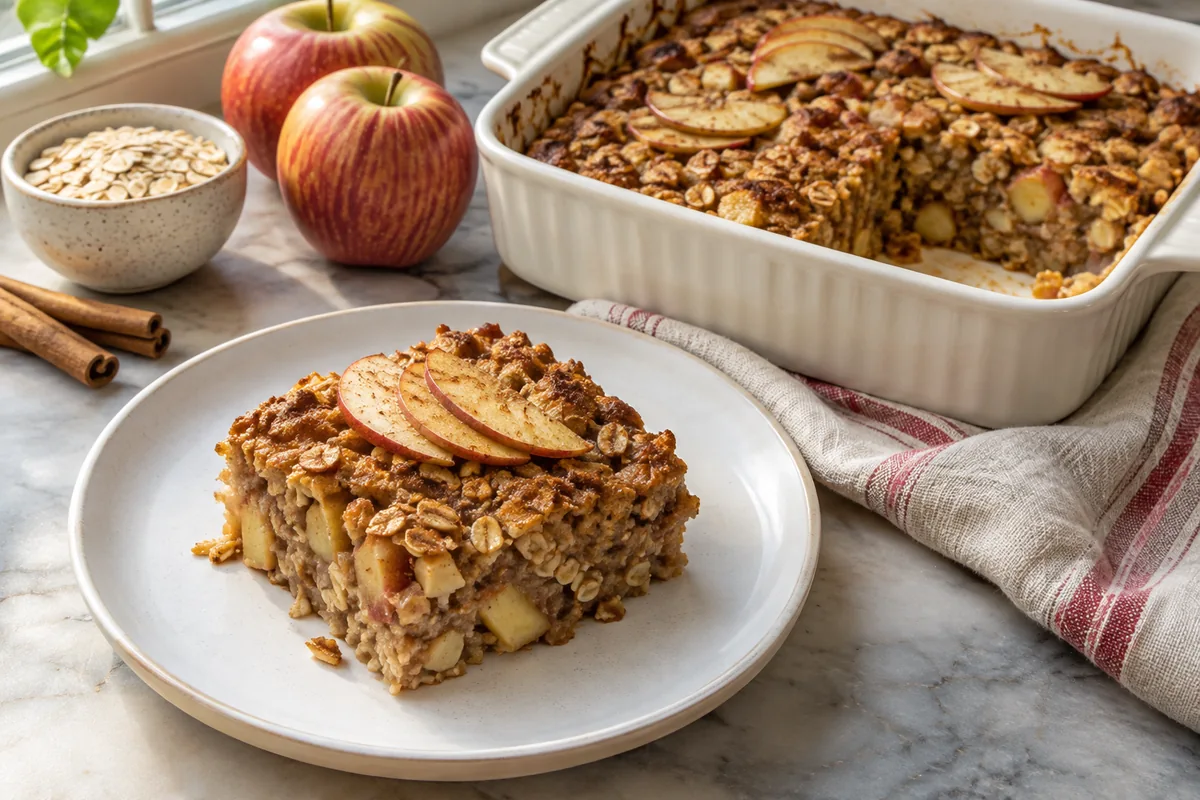
Apple cinnamon baked oatmeal sits between a bowl of porridge and a soft breakfast bar. The edges hold together, the middle stays moist, and small apple cubes bring pockets of fruit rather than a slippery layer underneath. Maple syrup adds enough sweetness to round out the cinnamon without turning the whole pan into dessert. It is especially useful when breakfast needs to be ready in portions instead of cooked one bowl at a time.
This version uses old-fashioned rolled oats, milk, and two eggs in an 8-inch square dish. The oats absorb the liquid as they bake, while the eggs provide just enough structure for gentle slicing after a short rest. Expect a tender, spoon-friendly square, not a dry granola bar or a fluffy cake. The apples should remain recognizable, with softened corners and a little bite.
Recipe at a glance
The total includes a 10-minute rest. Bake at 375 F in an 8-by-8-inch baking dish, at least 2 inches deep. You will also need two mixing bowls, a whisk, a flexible spatula, and an instant-read thermometer.
Ingredients
- 2 teaspoons unsalted butter, softened, for the dish
- 2 cups old-fashioned rolled oats (180 g)
- 2 teaspoons ground cinnamon
- 1 teaspoon baking powder
- 1/2 teaspoon fine salt
- 2 cups whole milk (480 ml)
- 2 large eggs
- 1/3 cup pure maple syrup (80 ml)
- 2 tablespoons unsalted butter, melted and cooled slightly
- 1 teaspoon vanilla extract
- 2 cups peeled, cored apples cut into 1/2-inch cubes (about 250 g prepared)
Choose apples for texture, not just sweetness
A firm sweet-tart apple gives the clearest contrast against the creamy oats. Granny Smith contributes sharper flavor and holds its shape; Honeycrisp or Pink Lady brings more sweetness while remaining substantial. Using one tart apple and one sweeter apple is a practical way to balance the pan, but measure the prepared cubes rather than relying on the number of apples. Fruit size varies considerably.
Peeling is recommended here because the skin can separate into papery strips while the flesh softens. Cut the cubes consistently: oversized chunks can stay crunchy after the oats are done, whereas tiny pieces tend to disappear. Avoid grated apple as a direct replacement. It releases liquid quickly and changes both the moisture balance and the finished structure.
Why rolled oats and separate mixing matter
Rolled oats have enough surface area to hydrate during the bake but retain individual flakes. Steel-cut oats need a different amount of liquid and a much longer cooking time; they are not interchangeable in this formula. Quick oats absorb faster and make a softer, more uniform interior. They can work in a pinch, but the result will lose much of the distinct oat texture.
Mixing the cinnamon, salt, and baking powder into the oats first distributes them before liquid makes everything cling together. In the second bowl, whisk the eggs completely into the milk so there are no streaks of white. The butter should be fluid but not hot. Small butter flecks caused by cold milk are harmless, but a hot stream can partially cook the eggs.
How to bake the oatmeal
- Heat the oven to 375 F with a rack in the center. Grease an 8-by-8-inch baking dish with the 2 teaspoons softened butter. Peel, core, and cube the apples, then measure 2 cups.
- In a large bowl, stir together the rolled oats, cinnamon, baking powder, and salt until the spice is evenly distributed.
- In another bowl, whisk the milk, eggs, maple syrup, 2 tablespoons melted butter, and vanilla until the eggs are fully blended.
- Pour the wet mixture into the oats and stir well. Fold in all the apples. Immediately transfer to the prepared dish, spread the fruit evenly, and level the surface without packing it down.
- Bake for 35 to 40 minutes, until the edges are lightly golden, the center no longer sloshes when the dish is nudged, and the center reaches 165 F. If necessary, continue baking in 3-minute intervals until that temperature is reached.
- Rest on a heatproof surface for 10 minutes. Cut into 6 portions for soft squares, or spoon into bowls. Serve warm.
Read the center before removing the pan
The surface can look dry before the middle is ready. Nudge the dish gently: a slight unified wobble is different from a loose wave of milk moving around the oats. Measure in the center without touching the bottom. The 165 F target is a conservative casserole endpoint; the FoodSafety.gov temperature chart also lists 160 F for egg dishes.
The ten-minute rest is functional. Hot starch and egg proteins are still settling, and steam redistributes through the pan. Slicing immediately can make a correctly baked batch seem underdone because the portions collapse on the spatula. After resting, a square should lift softly and leave a moist interior behind, rather than crumbs or a pool of liquid.
Make the texture suit your breakfast
For a bowl-style breakfast, serve the oatmeal warm before it becomes completely firm. For cleaner portions, let it cool a little longer, then use a thin spatula to lift each square. Chilling produces the neatest pieces because the oats continue holding moisture as they cool. That firmness relaxes again during reheating, particularly if you add a small splash of milk.
The maple syrup supplies moisture as well as sweetness. Reducing it to 1/4 cup gives a less sweet result without substantially changing the texture; removing it entirely makes the bake less rounded and slightly less tender. Honey can replace the syrup in the same volume, although its stronger sweetness changes the balance. Keep the apples at the stated amount rather than adding extra fruit to compensate.
Unsweetened dairy-free milk can replace the whole milk cup for cup. Oat milk gives a relatively rounded texture, while almond milk makes a lighter-tasting bake. Replace the melted butter with 2 tablespoons neutral oil and grease the pan with 2 teaspoons additional oil for a dairy-free version. The eggs remain important to the structure, so an egg-free preparation needs a separately developed formula.
Fix a wet middle or dry edges
If the middle remains loose while the edges brown, first check the dish dimensions. A smaller, deeper pan delays heating in the center. Loosely cover the browned edges with foil and continue baking, checking the temperature rather than increasing the heat. Apples measured before coring, extra milk, or a very heavy layer of fruit can also leave the center wetter than intended.
Dry edges usually point to overbaking or an oversized dish. Glass and ceramic retain heat after leaving the oven, so do not keep baking merely to obtain a dark crust. If a cooled portion feels firm but not scorched, reheat it covered with a tablespoon of milk. That restores some softness; it cannot reverse an excessively dry initial bake.
Overnight preparation and storing portions
For the most predictable overnight plan, mix the dry ingredients and refrigerate the whisked wet ingredients separately, covered. Dice the apples in the morning, combine everything, and bake as directed. Fully assembled oats absorb liquid overnight and bake with less separation between flakes. If you prefer that softer style, cover and refrigerate the assembled dish for up to 12 hours, then allow additional baking time and check the center temperature.
Refrigerate baked portions within 2 hours, or 1 hour above 90 F, in shallow covered containers. Keep at 40 F or colder and use within 3 to 4 days, following the FoodSafety.gov cold-storage chart. Freeze individual portions for up to 2 months for best texture. Thaw overnight in the refrigerator. Microwave a portion with a tablespoon of milk under a vented cover, checking in short intervals until its center reaches 165 F.
Build a balanced brunch around the pan
This oatmeal already brings fruit and grains, so a savory companion is more useful than another sweet topping. For a larger table, cheesy sausage, egg, and hash brown breakfast casserole supplies a hearty contrast. Cut both dishes into smaller portions so guests can take a little of each without an oversized plate.
For a fruit-forward gathering, blackberry cobbler French toast bake offers a different texture and brighter berry flavor. Treat the two bakes as alternatives on a buffet instead of stacking them into one serving. The apple oatmeal needs no elaborate finish: its best qualities are the warm cinnamon, tender fruit, and a center that stays pleasantly soft.