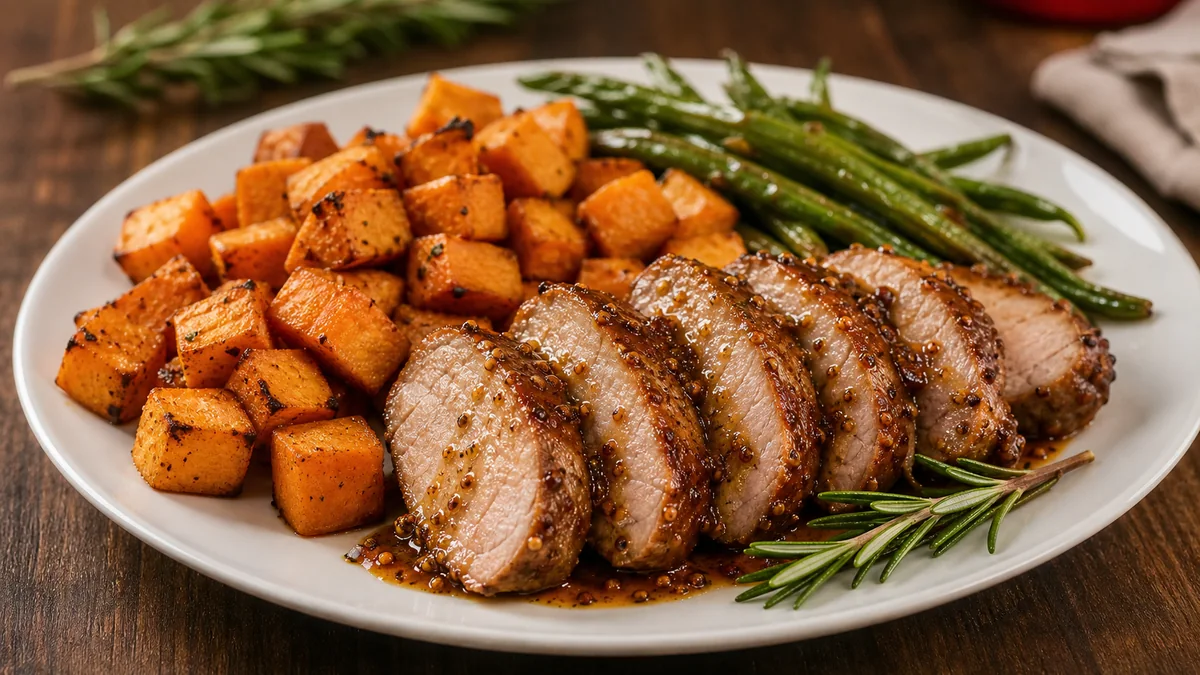
Maple Dijon pork tenderloin is a simple dinner that feels polished because the glaze does so much work.
The pork roasts tender, the sweet potatoes caramelize, and the mustard keeps the maple from tasting like dessert.
Recipe Snapshot
Why This Recipe Works
Pork tenderloin cooks quickly, so cutting the sweet potatoes smaller helps everything finish closer together.
The glaze is brushed on in stages so it seasons the meat without burning from too much sugar early on.
Before You Start
Maple Dijon Pork Tenderloin with Roasted Sweet Potatoes is easiest when the ingredients are prepped before the heat comes on. This is especially true for a recipe with a short cooking window, because the best texture comes from moving steadily instead of stopping to chop, measure, or search for a garnish while something is already in the pan.
Set out the main ingredients first: pounds pork tenderloin, large sweet potatoes, cubed, tablespoons olive oil, teaspoon salt. Those pieces carry most of the flavor and texture, so giving them a little attention up front makes the finished dish feel more intentional. If the recipe uses dairy, cheese, seafood, or quick-cooking meat, keep the heat controlled and avoid rushing the final few minutes.
The listed total time is 55 minutes, but the recipe feels faster if you clean as you go and keep a plate or tray nearby for cooked components. That small setup step keeps the counter from turning chaotic and helps the finished food land hot, fresh, and ready to serve.
Ingredient Notes and Smart Swaps
The ingredients in this recipe are flexible, but each one has a job. The protein or main base gives the dish substance, the seasoning creates the identity of the recipe, and the finishing ingredients add freshness, richness, or contrast. When you swap ingredients, try to replace like with like so the final texture still makes sense.
If you need to adjust the recipe, start with the mildest change first. Use a similar pasta shape, a comparable cooked grain, another melting cheese, or a related vegetable before changing several things at once. That keeps the recipe dependable while still letting you use what you already have.
Salt should be handled thoughtfully. Broth, cheese, sausage, bacon, sauces, and seasoning blends can all add sodium. Taste near the end before adding more, because it is much easier to add seasoning than to fix a dish that has become too salty.
Texture and Timing Guide
Good texture is what separates a decent recipe from one that people ask for again. Pork tenderloin is best when cooked accurately instead of guessed by color. Too much glaze early can burn. Brush in layers. These details may sound small, but they are usually where weeknight recipes either shine or fall flat.
Watch the visual cues more than the clock. Browning, bubbling, thickening, crisp edges, melted cheese, tender vegetables, or opaque seafood tell you more than a timer alone. The timer gets you close; the food tells you when it is actually ready.
Resting keeps the slices juicy. If something finishes early, move it off the heat instead of letting it sit there and overcook. If something needs more time, give it a few extra minutes rather than turning the heat too high and risking a scorched outside or broken sauce.
Common Mistakes to Avoid
The first mistake is overcrowding the pan or baking dish. Food needs space for moisture to escape. When ingredients are packed too tightly, they steam instead of brown, and the finished recipe loses some of the flavor that makes it satisfying.
The second mistake is adding finishing ingredients too early. Fresh herbs, lemon juice, delicate dairy, tender seafood, and some cheeses are better near the end. They are there to brighten, smooth, or finish the recipe, not to boil hard for the entire cook time.
The third mistake is serving immediately when the recipe needs a short rest. Casseroles, saucy pastas, skillet dinners, baked desserts, and stuffed vegetables often improve after 5 to 10 minutes. Resting helps sauces settle, cheese stop sliding, and juices stay where they belong.
How to Make It Fit a Real Weeknight
If you are cooking on a busy night, look for the parts that can be handled early. Measuring spices, chopping vegetables, grating cheese, cooking rice, trimming meat, or mixing a sauce can often be done before the actual cooking starts. That makes Maple Dijon Pork Tenderloin with Roasted Sweet Potatoes feel less like a production and more like a normal dinner that happens to taste good.
For serving, keep the plate simple. A rich main dish usually needs something crisp or fresh nearby, while a lighter main dish can handle bread, potatoes, rice, or a heartier side. The goal is balance: enough food to feel complete without burying the flavor that made you choose the recipe in the first place. That kind of practical pairing also makes leftovers easier to reuse the next day.
Ingredients
Gather and measure everything before you start. This keeps the cooking calm and prevents overcooking the fast-moving parts of the recipe.
- 1 1/2 pounds pork tenderloin
- 2 large sweet potatoes, cubed
- 2 tablespoons olive oil
- 1 teaspoon salt
- 1/2 teaspoon black pepper
- 2 tablespoons maple syrup
- 2 tablespoons Dijon mustard
- 1 tablespoon apple cider vinegar
- 2 cloves garlic, minced
- 1 teaspoon chopped rosemary
- 12 ounces green beans
How to Make Maple Dijon Pork Tenderloin with Roasted Sweet Potatoes
Read through the steps once before cooking so the timing feels natural.
- Heat oven to 425 degrees F.
- Toss sweet potatoes with olive oil, salt, and pepper.
- Roast sweet potatoes on a sheet pan for 15 minutes.
- Whisk maple syrup, Dijon, vinegar, garlic, and rosemary.
- Season pork with salt and pepper.
- Push sweet potatoes aside and add pork to the pan.
- Brush pork with half the glaze.
- Roast 18 to 25 minutes, adding green beans during the last 12 minutes.
- Brush with remaining glaze near the end.
- Rest pork 5 to 10 minutes, then slice.
Cook's Notes
Use a thermometer
Pork tenderloin is best when cooked accurately instead of guessed by color.
Do not drown the pan
Too much glaze early can burn. Brush in layers.
Let the pork rest
Resting keeps the slices juicy.
Easy Variations
Use these simple changes to adjust the recipe for what you have on hand.
- Add extra vegetables for more color and texture.
- Increase the seasoning if you like bolder flavor.
- Swap the protein with a similar cooked option when needed.
- Use a lighter dairy option if you prefer a less rich finish.
What to Serve With It
Serve with a green salad, dinner rolls, roasted Brussels sprouts, or rice pilaf.
Storage and Reheating
Refrigerate pork and vegetables up to 4 days. Reheat gently so the pork does not dry out.
Cool leftovers promptly and refrigerate them in shallow containers. Use the FoodSafety.gov cold storage chart when you need a reliable leftover reference.
Scaling the Recipe
Most of the time, this recipe can be doubled if you use a larger pan, pot, baking dish, or sheet pan and avoid crowding the main ingredients. When scaling up, season in layers instead of doubling every salty ingredient immediately. Broth, cheese, sauces, bacon, sausage, and seasoning blends can become too strong if they are increased without tasting.
If you are cutting the recipe in half, watch the cooking time closely. Smaller batches often cook faster, and sauces can reduce more quickly because there is less volume in the pan. Keep the same visual cues in mind and adjust by texture instead of relying only on the clock.
Final Thoughts
Maple Dijon pork tenderloin is weeknight-friendly but nice enough for guests, especially when roasted vegetables cook on the same pan.