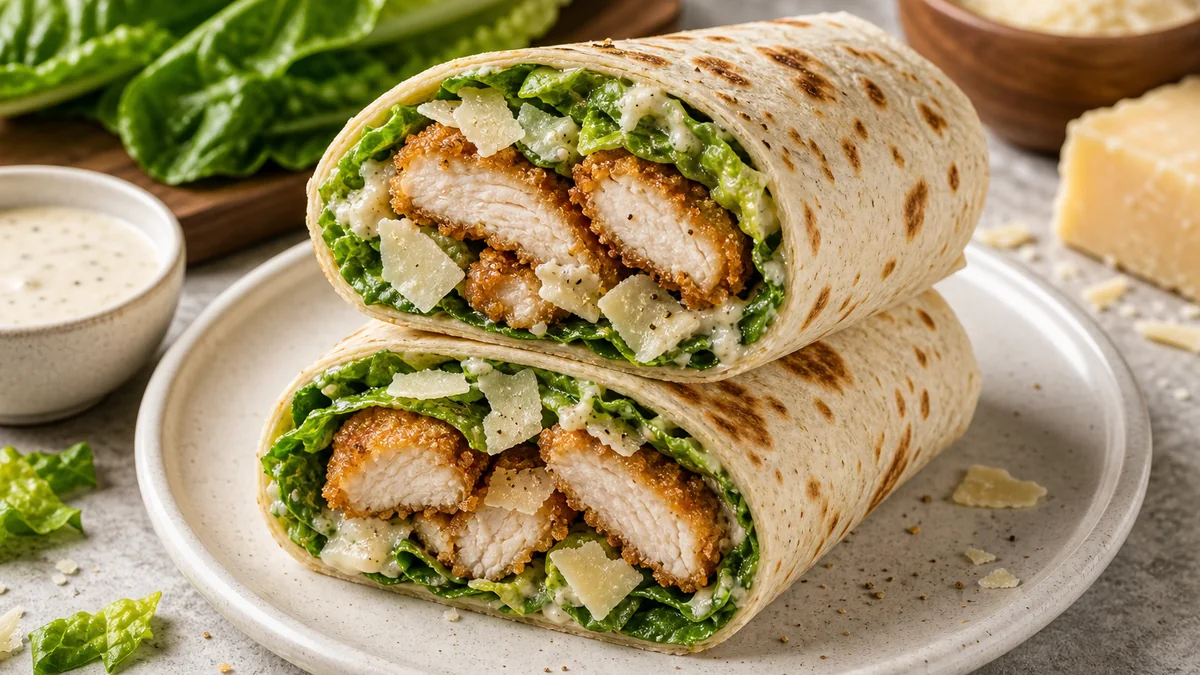
Crispy chicken Caesar wraps are crunchy, creamy, and easy to pack or serve for dinner.
They use crisp chicken, romaine, Parmesan, Caesar dressing, and soft tortillas.
Recipe Snapshot
Why This Recipe Works
The wrap works because the chicken gives crunch, the romaine keeps it fresh, and Caesar dressing brings salty tang.
The best version balances a sturdy base with juicy filling, a little crunch, and sauce that adds flavor without making everything collapse.
Slicing the wraps shows off the filling and makes them easier to eat.
Before You Start
Crispy Chicken Caesar Wraps is much easier when the prep is handled before the pan, oven, skillet, or mixing bowl gets busy. Set out the main ingredients, measure the seasonings, and have your serving pieces ready. That little bit of order helps the recipe feel calm instead of rushed.
Pay attention to the ingredient that controls the timing. For this recipe, that is usually the 4 large tortillas. Once that part is cooked, browned, tender, chilled, or set properly, the rest of the dish comes together with fewer surprises.
Handheld recipes are best served soon after assembly. Prep the fillings ahead, then toast, fold, slice, or plate near serving time.
Flavor Roadmap
The main flavor path for Crispy Chicken Caesar Wraps starts with 4 large tortillas, 1 pound crispy chicken strips, 4 cups chopped romaine, 1/2 cup caesar dressing, 1/3 cup parmesan. Those ingredients give the recipe its base, but the finished dish depends on how they are handled. Browning, simmering, baking, chilling, toasting, or tossing at the right moment changes the final result more than adding extra ingredients just for the sake of it.
Think of the seasoning in layers. The first layer seasons the main ingredient, the second layer builds the sauce or filling, and the final layer comes from garnish, acid, herbs, cheese, glaze, or crunch. This is why tasting near the end matters. A recipe can have all the right ingredients and still need one small adjustment before it feels finished.
If the finished flavor seems flat, add brightness before adding more richness. A little lemon, vinegar, herbs, scallions, pickles, fresh fruit, or crunchy vegetables can do more than another handful of cheese or another spoonful of sauce. If it tastes sharp, balance it with a small amount of fat, sweetness, starch, or dairy.
Ingredients
Do not overdress the lettuce or the wrap will get soggy.
- 4 large tortillas
- 1 pound crispy chicken strips
- 4 cups chopped romaine
- 1/2 cup Caesar dressing
- 1/3 cup Parmesan
- 1/2 teaspoon black pepper
- Lemon juice
- Crouton crumbs, optional
Ingredient Prep Checklist
Before cooking, check the size and shape of the main ingredients. Pieces that are similar in size cook more evenly, which keeps the recipe from having some bites overdone and others undercooked. This matters most with meat, seafood, potatoes, pasta, vegetables, and baked fillings.
Keep wet and crisp components separate until the recipe calls for combining them. Sauces, dressings, fruit, juicy vegetables, and creamy fillings can soften breading, tortillas, crust, lettuce, pasta, or toppings if they sit together too long. That separation is one of the easiest ways to protect texture.
Use the ingredient list as a guide, but let common sense win when your ingredients are larger, smaller, sweeter, saltier, or more watery than expected. Recipes work best when you watch what is happening in front of you rather than following the clock blindly.
How to Make Crispy Chicken Caesar Wraps
Follow the order of the steps so the texture stays controlled and the final dish lands hot.
- Cook chicken strips until crisp.
- Toss romaine with Caesar, Parmesan, pepper, and lemon.
- Warm tortillas briefly.
- Add lettuce and chicken.
- Sprinkle with crouton crumbs if using.
- Roll tightly.
- Slice and serve.
How to Know It Is Done
Look for a filling that is hot, a base that is toasted or sturdy, and toppings that still have some life left in them. A good handheld should hold together for the first bite instead of collapsing immediately.
Use visual cues first, then confirm with temperature, texture, or resting time where it matters. Chicken, turkey, reheated leftovers, and many mixed dishes should be checked carefully. Breads, casseroles, desserts, and saucy dishes often need a few minutes of patience after cooking because carryover heat and resting time improve the final texture.
When in doubt, pause and inspect the thickest part, the center of the dish, or the piece that looks least cooked. That small check prevents the two most common problems: pulling food too early because the top looks done, or leaving it too long because you were waiting for a timer instead of reading the food.
Recipe Tips
Warm tortillas
They roll without tearing.
Keep chicken crisp
Add it right before rolling.
Use less dressing first
You can serve extra on the side.
Easy Variations
Change the protein or make it spicier.
- Use grilled chicken.
- Add bacon.
- Use buffalo chicken.
- Add tomatoes.
Common Mistakes to Avoid
The most common handheld mistake is overfilling. A generous filling looks good until it spills out and makes the first bite impossible.
Another mistake is skipping the final taste or texture check. A squeeze of lemon, a pinch of salt, a handful of herbs, a little extra sauce, or a few extra minutes in the oven can make the recipe feel finished instead of merely cooked.
Do not let the garnish be an afterthought. The right garnish adds freshness, color, crunch, or contrast. It also helps the finished plate look intentional, which matters when a recipe is simple.
Small Details That Help
Use a clean plate, bowl, board, or platter for serving instead of carrying the cooking pan straight to the table every time. That small step makes Crispy Chicken Caesar Wraps look better and gives you a chance to add garnish, sauce, or a final sprinkle evenly.
If the dish feels heavy, serve a smaller portion with something fresh beside it. If it feels light, add a starch, bread, salad with protein, or an easy side so the meal feels complete.
Make-Ahead Notes
Prep lettuce and dressing separately; assemble before eating.
If you are cooking for company, do the chopping, measuring, mixing, or sauce prep early. Save the final cooking, crisping, baking, or assembly step for closer to serving time so the texture is at its best.
Leftover Ideas
Leftover fillings are usually better than leftover assembled wraps, tacos, sliders, or flatbreads. Store the filling separately, then rebuild with fresh bread, tortillas, lettuce, or crust when you are ready to eat.
If you plan to use leftovers for lunch, portion them before refrigerating. Smaller containers cool faster, reheat more evenly, and make it easier to grab a realistic serving instead of repeatedly opening the same large dish.
For best results, label leftovers mentally by texture. Crisp foods need dry heat, creamy foods need gentle heat and a splash of liquid, and fresh toppings usually belong on the plate after reheating. That one habit keeps second-day food from feeling tired.
What to Serve With It
Serve with chips, fruit, soup, or pasta salad.
Storage and Reheating
Store components separately for best texture.
Cool leftovers promptly and store them in shallow airtight containers. For general timing, the FoodSafety.gov cold storage chart is a useful reference.
Final Thoughts
These wraps are simple, but the crisp chicken makes them feel more satisfying than a plain salad.