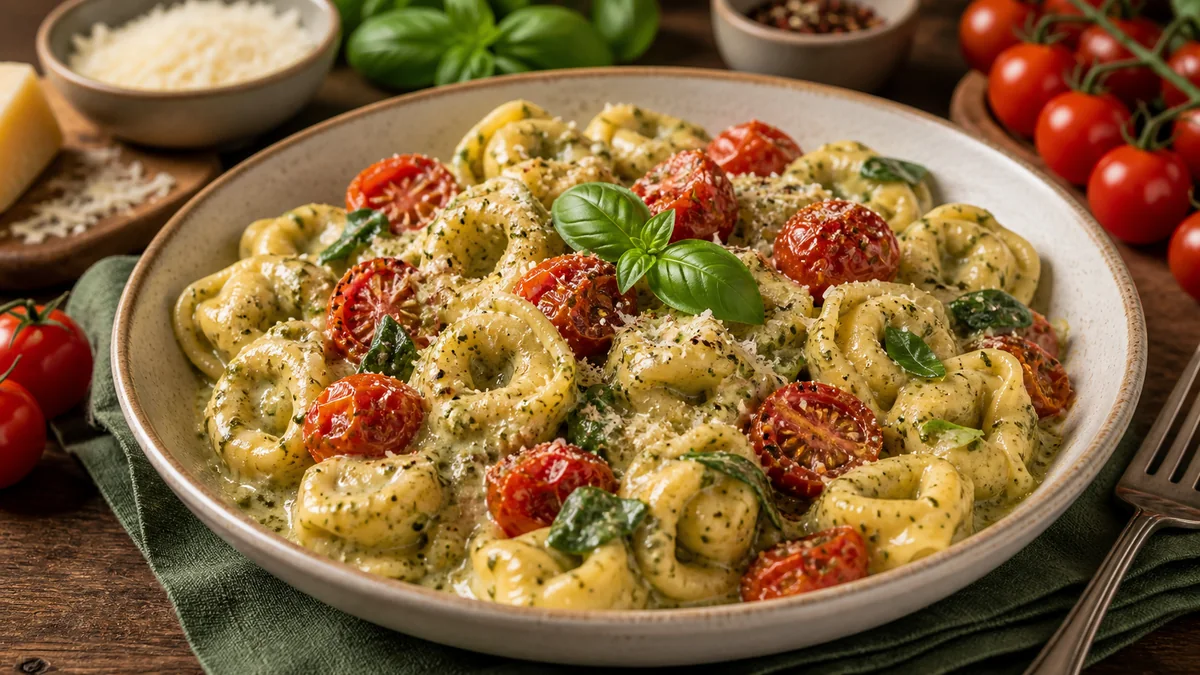
Creamy pesto tortellini with roasted tomatoes is fast, colorful, and full of basil flavor.
Cheese tortellini gets tossed in a creamy pesto sauce with blistered tomatoes and Parmesan.
Recipe Snapshot
Why This Recipe Works
Roasted tomatoes bring sweetness and acidity, while pesto gives the sauce flavor without much prep.
The best version has one strong main flavor, one fresh finish, and a texture contrast that keeps the plate interesting.
Tortellini makes the dish filling even with a short ingredient list.
Before You Start
Creamy Pesto Tortellini with Roasted Tomatoes is much easier when the prep is handled before the pan, oven, skillet, or mixing bowl gets busy. Set out the main ingredients, measure the seasonings, and have your serving pieces ready. That little bit of order helps the recipe feel calm instead of rushed.
Pay attention to the ingredient that controls the timing. For this recipe, that is usually the 20 ounces cheese tortellini. Once that part is cooked, browned, tender, chilled, or set properly, the rest of the dish comes together with fewer surprises.
Dinner recipes move best when the slower ingredient starts first and quick-cooking ingredients wait until the end.
Flavor Roadmap
The main flavor path for Creamy Pesto Tortellini with Roasted Tomatoes starts with 20 ounces cheese tortellini, 2 cups cherry tomatoes, 1 tablespoon olive oil, 1/2 cup pesto, 1/2 cup cream. Those ingredients give the recipe its base, but the finished dish depends on how they are handled. Browning, simmering, baking, chilling, toasting, or tossing at the right moment changes the final result more than adding extra ingredients just for the sake of it.
Think of the seasoning in layers. The first layer seasons the main ingredient, the second layer builds the sauce or filling, and the final layer comes from garnish, acid, herbs, cheese, glaze, or crunch. This is why tasting near the end matters. A recipe can have all the right ingredients and still need one small adjustment before it feels finished.
If the finished flavor seems flat, add brightness before adding more richness. A little lemon, vinegar, herbs, scallions, pickles, fresh fruit, or crunchy vegetables can do more than another handful of cheese or another spoonful of sauce. If it tastes sharp, balance it with a small amount of fat, sweetness, starch, or dairy.
Ingredients
Roast or blister the tomatoes before making the sauce.
- 20 ounces cheese tortellini
- 2 cups cherry tomatoes
- 1 tablespoon olive oil
- 1/2 cup pesto
- 1/2 cup cream
- 1/4 cup Parmesan
- 1 clove garlic
- Basil
- Black pepper
Ingredient Prep Checklist
Before cooking, check the size and shape of the main ingredients. Pieces that are similar in size cook more evenly, which keeps the recipe from having some bites overdone and others undercooked. This matters most with meat, seafood, potatoes, pasta, vegetables, and baked fillings.
Keep wet and crisp components separate until the recipe calls for combining them. Sauces, dressings, fruit, juicy vegetables, and creamy fillings can soften breading, tortillas, crust, lettuce, pasta, or toppings if they sit together too long. That separation is one of the easiest ways to protect texture.
Use the ingredient list as a guide, but let common sense win when your ingredients are larger, smaller, sweeter, saltier, or more watery than expected. Recipes work best when you watch what is happening in front of you rather than following the clock blindly.
How to Make Creamy Pesto Tortellini with Roasted Tomatoes
Follow the order of the steps so the texture stays controlled and the final dish lands hot.
- Roast tomatoes with olive oil at 425 degrees F for 15 minutes.
- Cook tortellini according to package directions.
- Warm cream and garlic in a skillet.
- Stir in pesto and Parmesan.
- Add tortellini and tomatoes.
- Toss gently.
- Garnish with basil and pepper.
How to Know It Is Done
Look for the main ingredient to be cooked through, the sauce to cling instead of puddle, and the garnish to add freshness at the end. The final dish should taste complete before it reaches the plate.
Use visual cues first, then confirm with temperature, texture, or resting time where it matters. Chicken, turkey, reheated leftovers, and many mixed dishes should be checked carefully. Breads, casseroles, desserts, and saucy dishes often need a few minutes of patience after cooking because carryover heat and resting time improve the final texture.
When in doubt, pause and inspect the thickest part, the center of the dish, or the piece that looks least cooked. That small check prevents the two most common problems: pulling food too early because the top looks done, or leaving it too long because you were waiting for a timer instead of reading the food.
Recipe Tips
Do not boil pesto
Gentle heat keeps it fresh.
Save pasta water
It helps loosen the sauce.
Use ripe tomatoes
They give the best pop of flavor.
Easy Variations
Make it heartier or greener.
- Add chicken.
- Add spinach.
- Use sun-dried tomato pesto.
- Top with toasted pine nuts.
Common Mistakes to Avoid
The most common dinner mistake is turning the heat too high to save time. It usually burns the outside before the center or sauce is right.
Another mistake is skipping the final taste or texture check. A squeeze of lemon, a pinch of salt, a handful of herbs, a little extra sauce, or a few extra minutes in the oven can make the recipe feel finished instead of merely cooked.
Do not let the garnish be an afterthought. The right garnish adds freshness, color, crunch, or contrast. It also helps the finished plate look intentional, which matters when a recipe is simple.
Small Details That Help
Use a clean plate, bowl, board, or platter for serving instead of carrying the cooking pan straight to the table every time. That small step makes Creamy Pesto Tortellini with Roasted Tomatoes look better and gives you a chance to add garnish, sauce, or a final sprinkle evenly.
If the dish feels heavy, serve a smaller portion with something fresh beside it. If it feels light, add a starch, bread, salad with protein, or an easy side so the meal feels complete.
Make-Ahead Notes
Roast tomatoes ahead and warm them before tossing.
If you are cooking for company, do the chopping, measuring, mixing, or sauce prep early. Save the final cooking, crisping, baking, or assembly step for closer to serving time so the texture is at its best.
Leftover Ideas
Leftovers can usually be turned into bowls, wraps, salad toppings, or quick lunches. Keep sauces or fresh toppings separate when possible so the texture stays better.
If you plan to use leftovers for lunch, portion them before refrigerating. Smaller containers cool faster, reheat more evenly, and make it easier to grab a realistic serving instead of repeatedly opening the same large dish.
For best results, label leftovers mentally by texture. Crisp foods need dry heat, creamy foods need gentle heat and a splash of liquid, and fresh toppings usually belong on the plate after reheating. That one habit keeps second-day food from feeling tired.
What to Serve With It
Serve with salad, garlic bread, or grilled chicken.
Storage and Reheating
Refrigerate up to 3 days and reheat gently.
Cool leftovers promptly and store them in shallow airtight containers. For general timing, the FoodSafety.gov cold storage chart is a useful reference.
Final Thoughts
This tortellini is quick enough for a busy night but still feels like a real pasta dinner.